
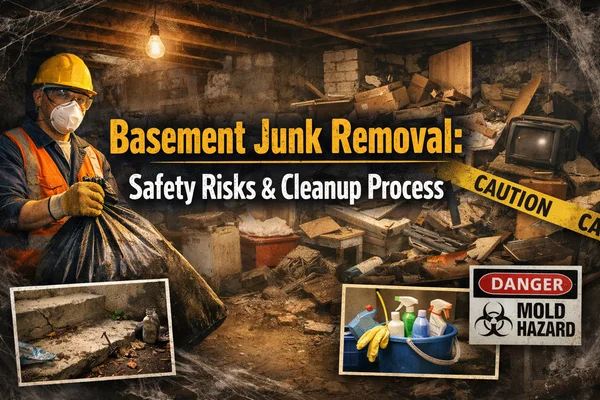
But here is the thing most people do not consider – basement cleanouts come with real safety risks. This is not like clearing out a spare bedroom. Basements present unique challenges that can lead to injuries, exposure to hazardous materials, and even structural problems if handled incorrectly. Before you start hauling boxes up those stairs, you need to understand what you are getting into.
This guide walks through the common safety hazards found during basement junk removal, the step-by-step cleanup process, and when it makes sense to bring in professional help. Whether you are dealing with decades of accumulated belongings or cleaning out an estate property, this information will help you approach the project safely.
Why Basements Become Junk Magnets
Understanding why basements accumulate so much stuff helps explain the scope of most cleanout projects. Unlike other rooms in your home, basements typically do not get regular foot traffic or attention. They are out of sight and out of mind, which makes them perfect dumping grounds for items you are not ready to part with.
Seasonal decorations end up down there after each holiday. Old furniture that does not fit the current decor gets stored temporarily. Kids toys, sports equipment, and school projects accumulate over the years. Add in boxes from previous moves that never got unpacked, and you have got a recipe for serious clutter.
In Springfield, where many homes were built in the mid-20th century, basements often contain items spanning multiple generations. Estate cleanouts frequently reveal belongings dating back 40 or 50 years. This long accumulation period means you are likely dealing with materials and products that were common decades ago but are now considered hazardous.
Major Safety Risks During Basement Cleanouts
Basement junk removal is not just physically demanding work. It carries specific hazards that can cause serious harm if you are not prepared. Here are the primary risks you need to watch for.
Hazardous Materials and Chemicals
Basements commonly store household chemicals that have been sitting for years. Old paint cans, solvents, pesticides, automotive fluids, and cleaning products can degrade over time. Containers may rust, leak, or become unstable. Opening or moving these items can release toxic fumes or cause chemical burns.
Older homes in Springfield may also contain lead paint on basement walls, doors, or stored furniture. Disturbing lead paint creates toxic dust that is dangerous when inhaled. Homes built before 1980 often have asbestos in floor tiles, pipe insulation, or ceiling materials. Asbestos fibers become airborne when these materials are disturbed and can cause serious respiratory disease years after exposure.
Propane tanks, old fire extinguishers, and compressed gas cylinders present explosion risks if they are damaged or corroded. These items require special handling and cannot simply be thrown in regular trash.
Mold and Biological Hazards
Missouri’s humid climate creates perfect conditions for mold growth in basements. Areas with poor ventilation, past water intrusion, or condensation problems often develop mold colonies behind stored items. You might not see it until you start moving boxes.
Black mold and other toxic varieties can cause respiratory problems, allergic reactions, and serious illness. Disturbing moldy materials spreads spores throughout the space. Without proper respiratory protection, you are breathing in potentially harmful organisms.
Rodent droppings and nesting materials present another biological hazard. Mice and rats commonly make homes in cluttered basements, and their waste can carry hantavirus and other diseases. Dried droppings become airborne dust when disturbed.
Structural and Physical Dangers
Heavy items stacked precariously create falling hazards. Old shelving units may be rusted or weakened. Piles can shift unexpectedly when you remove items from the bottom or middle. Getting struck by falling objects causes injuries ranging from minor bruises to serious head trauma.
Basement floors can be uneven, cracked, or slippery. Poor lighting makes it hard to see where you are stepping. Tripping hazards are everywhere – extension cords, tools, scattered items, and low-hanging obstacles. Falls in basements often result in injuries because you are typically carrying something when they happen.
Narrow, steep basement stairs amplify the danger. Carrying heavy or bulky items up stairs while navigating tight turns is one of the most common causes of injury during cleanouts. Back injuries, falls, and dropped items can all occur in seconds.
Electrical Hazards
Older basements often have outdated wiring, exposed connections, and deteriorated insulation. Moving items can disturb electrical components you did not know were there. Water intrusion combined with old wiring creates shock and fire risks.
Old appliances stored in basements may have damaged cords or faulty components. Plugging them in to test if they still work can cause shorts, sparks, or electrical fires. Extension cords running under piles of junk can overheat or get damaged.
Essential Safety Equipment for Basement Cleanouts
Before you move a single box, gather the right protective equipment. This is not optional – it is the minimum you need to handle a basement cleanout safely.
Respiratory protection is critical. At minimum, use an N95 mask to filter dust and particles. If you suspect mold or will be disturbing potentially hazardous materials, upgrade to a half-face respirator with appropriate cartridges. The few dollars spent on proper masks can prevent serious respiratory problems.
Heavy-duty work gloves protect your hands from cuts, splinters, and contact with unknown substances. Leather or thick synthetic gloves work better than thin latex for handling rough or heavy items. Keep chemical-resistant gloves available for dealing with old paint, solvents, or unknown liquids.
Safety glasses or goggles prevent dust and debris from getting in your eyes. When moving items overhead or working in dusty conditions, eye protection makes a real difference. Steel-toed boots protect your feet from dropped items and provide better traction on slippery surfaces.
Adequate lighting is essential. Bring portable work lights or headlamps to illuminate dark corners. Good visibility prevents trips, helps you identify hazards, and makes the work go faster. A basic first aid kit should be on hand for minor cuts and scrapes.
Step-by-Step Basement Cleanup Process
A systematic approach makes basement cleanouts safer and more efficient. Rushing in without a plan leads to wasted effort and increased risk. Here is how to tackle the project methodically.
Initial Assessment and Planning
Start by walking through the entire basement without touching anything. Look for obvious hazards like water damage, visible mold, chemical containers, or unstable piles. Note any areas that concern you. Check the condition of the stairs and identify your exit routes.
Assess the scope of the project realistically. How much stuff is actually down there? Are there items you can identify as definitely keep, definitely trash, or unknown? Estimate how many truckloads of junk might need removal. This helps you plan for disposal logistics and timeline.
Check if utilities are working properly. Test lights and note which areas need additional lighting. Make sure water can be shut off if needed. Know where the electrical panel is located in case you need to cut power to a section.
Creating Work Zones
Divide the basement into manageable sections and work through one at a time. Trying to tackle everything at once leads to chaos and incomplete work. Pick a starting point, typically near the stairs or the most accessible area, and work outward.
Set up staging areas for different categories of items. You will need space for things to keep, items to donate, recyclables, regular trash, and hazardous materials that require special disposal. Having clear destinations for items as you sort them prevents re-handling and keeps the workflow moving.
Keep pathways clear as you work. A cluttered exit route becomes dangerous when you are carrying heavy items or need to leave quickly. Maintain at least one clear path to the stairs at all times.
Sorting and Decision Making
Every item needs to go somewhere. Make decisions quickly – lingering over each piece turns a weekend project into a month-long ordeal. If you have not used something in five years and forgot you owned it, you probably do not need it.
For a systematic approach to clearing different areas of your home, check out our room-by-room junk removal guide which covers practical tips for tackling each space efficiently.
Be ruthless about broken items. That lamp you have been meaning to fix for eight years? It is time to let it go. Furniture with water damage, mold, or pest infestation should not be donated – it needs proper disposal. Items that are genuinely valuable or irreplaceable get kept. Everything else deserves honest evaluation.
Document valuable items before disposing of anything in estate cleanout situations. Take photos and make notes. Some things that look like junk might have value to collectors or family members. But do not let this slow you down too much – most basement contents are exactly what they appear to be.
Handling Hazardous Items Properly
Set aside all hazardous materials as you encounter them. Do not mix them with regular trash or try to deal with them later. Old paint, chemicals, batteries, fluorescent bulbs, electronics, and pressurized containers all require special disposal.
Springfield residents can dispose of household hazardous waste at designated collection events or the city’s environmental services facility. Check current schedules and accepted items before loading up your vehicle. Some materials need specific containers or quantities for safe transport.
If you find materials you cannot identify, treat them as hazardous until proven otherwise. Unknown liquids, powders, or substances should be handled with appropriate caution. When in doubt, consult with disposal professionals rather than guessing.
Heavy Item Removal Techniques
Large appliances, furniture, and heavy equipment present the biggest physical challenge in basement cleanouts. These items did not walk down those stairs by themselves – they were likely carried by multiple people or disassembled first.
Never attempt to carry heavy items up stairs alone. The combination of weight, awkward positioning, and limited visibility creates serious injury risk. Two or three people working together can move items that would be dangerous for one person.
Use proper lifting technique – bend at the knees, keep your back straight, and lift with your legs. Furniture dollies and hand trucks help move heavy items across flat surfaces but may not work on stairs. Sometimes the safest option is disassembling large items before removal.
Garages often contain similar heavy item challenges. Our garage cleanout guide explains what typically gets removed and realistic timelines for these projects.
Common Items Found During Basement Cleanouts
Knowing what to expect helps you prepare for disposal logistics. Springfield basement cleanouts typically yield a predictable mix of items, though estate situations often include surprises.
Furniture makes up a significant portion of most basement junk. Old couches, chairs, tables, dressers, and bed frames end up stored when they are replaced upstairs. Much of this furniture has deteriorated from basement conditions and is not suitable for donation.
Boxes of documents, photos, and papers require careful review. You might find important records, sentimental items, or documents that need secure shredding. Do not rush through paper sorting – take time to check contents before discarding.
Holiday decorations accumulate impressively over decades. Multiple artificial Christmas trees, boxes of ornaments from various eras, and seasonal items for every holiday can fill substantial space. Most families keep far more decorations than they actually use.
Exercise equipment is a basement cleanout staple. Treadmills, weight benches, stationary bikes, and various fitness gadgets often end up downstairs after initial enthusiasm fades. These items are heavy and awkward to remove.
Old electronics including televisions, computers, monitors, and stereo equipment require proper recycling. CRT televisions and monitors contain hazardous materials and cannot be disposed of with regular trash.
When to Call Professional Junk Removal Services
Some basement cleanout situations genuinely require professional help. Recognizing these scenarios can prevent injuries, save time, and ensure proper handling of difficult materials.
Significant mold presence calls for professional assessment and remediation. If you see extensive mold growth covering walls, ceilings, or large portions of stored items, the cleanup requires specialized equipment and techniques. DIY mold removal often spreads spores and makes problems worse.
Suspected asbestos materials should never be disturbed without professional testing. If your Springfield home was built before 1980 and you find old floor tiles, pipe insulation, or textured coatings that might contain asbestos, stop work and get an assessment.
Hoarding situations present unique challenges beyond typical clutter. Extreme accumulation creates safety hazards, potential biohazard conditions, and emotional complexity that professionals are trained to handle. These cleanouts require patience, proper equipment, and often coordination with mental health resources.
Time constraints sometimes make professional help the practical choice. If you need a basement cleared quickly for a home sale, estate settlement, or rental turnover, professional crews can complete in days what might take weeks of weekend work.
Physical limitations should not be ignored. If age, health conditions, or injuries prevent safe lifting and climbing stairs, attempting a basement cleanout alone is risky. Professional crews have the manpower and equipment to handle the physical demands safely.
Cost Factors for Basement Junk Removal
Understanding what affects basement cleanout costs helps you budget appropriately and evaluate quotes from service providers.
Volume is the primary cost driver. More stuff means more labor, more truck space, and higher disposal fees. Professional junk removal services typically price based on how much truck space your items occupy. A basement with a few pieces of furniture costs less than one packed floor to ceiling.
Access difficulty affects pricing. Steep, narrow, or winding basement stairs require more time and effort than a walkout basement with ground-level access. If items have to be carried a long distance or through tight spaces, expect higher labor costs.
Hazardous materials add cost. Proper disposal of chemicals, paint, electronics, and other regulated items involves fees that regular trash does not incur. Some items require special handling or transport to specific facilities.
Item weight matters for large pieces. A single item might not take much space but could require multiple crew members to move safely. Heavy appliances, safes, and dense furniture increase labor requirements.
Preventing Future Basement Clutter
After investing time and money in a basement cleanout, the last thing you want is to repeat the process in five years. Simple habits prevent the gradual accumulation that leads to overwhelming clutter.
Adopt a one-in-one-out policy. When something new goes into the basement, something old comes out. This maintains balance and forces regular evaluation of what you are actually storing.
Schedule annual basement reviews. Pick a day each year to walk through your basement storage and honestly assess what is there. Items you have not touched in two years probably are not serving any purpose.
Use clear storage containers with labels. You are more likely to remember what you own and use stored items when you can actually see and find them. Mystery boxes multiply over time.
Set boundaries for specific categories. Decide how many boxes of holiday decorations is reasonable, how much camping gear you will actually use, or how many old electronics to keep. Limits prevent endless expansion.
Springfield Missouri Disposal Resources
Knowing where to take different materials streamlines the disposal process and ensures you are following local regulations.
Springfield’s Yardwaste Recycling Center accepts furniture, appliances, and general household items for disposal. Regular trash collection has limits on bulk items and will not accept certain materials. Check current guidelines before putting large items at the curb.
Electronics recycling is available at several locations in the Springfield area. Best Buy and Staples accept many electronics for recycling. The city occasionally hosts e-waste collection events for larger quantities or unusual items.
Household hazardous waste requires special handling. The Springfield Environmental Services Department provides information on proper disposal methods and collection schedules. Never pour chemicals down drains or throw hazardous materials in regular trash.
Donation centers including Habitat for Humanity ReStore, Goodwill, and various local charities accept usable furniture and household items. Donated items must be clean, functional, and in reasonable condition. Many organizations offer pickup services for larger donations.
Professional Basement Cleanout Services in Springfield MO
Facing a basement full of accumulated junk can feel overwhelming. The safety hazards, heavy lifting, and disposal logistics add up to a significant project that most people underestimate.
Easy Cleanouts LLC provides complete basement junk removal and cleanout services throughout Springfield, Missouri and surrounding communities. Our experienced crews handle the heavy lifting, proper sorting, and responsible disposal so you do not have to risk injury or spend weekends hauling loads to various facilities.
We understand the unique challenges basement cleanouts present – from navigating tight stairs to dealing with decades of accumulated belongings. Whether you are clearing out a family home, preparing a property for sale, or just reclaiming usable space, we approach each project with the care and efficiency it deserves.
Our services include comprehensive junk removal, property cleanouts, estate cleanouts, hoarding situations, and disaster cleanup. We handle hazardous material identification and ensure items go to appropriate disposal or recycling facilities.
Contact Easy Cleanouts LLC for a free estimate on your basement cleanout project. We offer fast, affordable service with upfront pricing – no hidden fees or surprises. Let us do the heavy lifting while you focus on what matters.
Final Thoughts
Basement junk removal requires more planning and caution than most people realize. The combination of hazardous materials, physical dangers, and sheer volume of stuff makes these projects genuinely challenging. Taking time to assess risks, gather proper equipment, and work systematically prevents injuries and produces better results.
Whether you tackle your Springfield basement cleanout yourself or bring in professional help, the key is approaching it with realistic expectations. This is not a quick afternoon project. But the reward – a clean, usable basement space – makes the effort worthwhile.
Do not let safety concerns stop you from reclaiming your basement. With the right preparation and approach, even the most cluttered basement can be transformed into functional storage or living space.