
And honestly, that instinct makes sense. Attic space is valuable. A cleaned-out attic means better organization, improved air quality, and sometimes even extra storage or living space. But before you grab some trash bags and head up there this weekend, you need to understand what you are actually walking into.
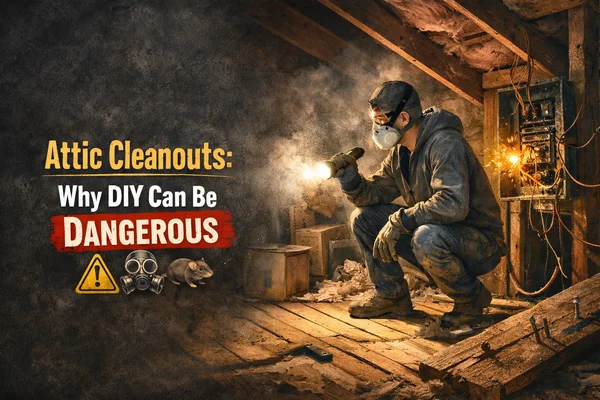
DIY attic cleanouts come with risks that most homeowners never consider. We are not talking about minor inconveniences. We are talking about genuine safety hazards that can lead to serious injuries, health problems, and property damage.
This article breaks down what makes attic cleanouts more dangerous than other home projects, what specific hazards you might encounter, and how to decide whether tackling it yourself makes sense for your situation.
Understanding What Makes Attics Different from Other Rooms
Attics are not like cleaning out a spare bedroom or even a cluttered garage. The physical environment itself creates challenges you will not find elsewhere in your home.
First, there is the access issue. Most attics are reached through a narrow opening, often with a pull-down ladder or a small hatch. You are climbing up into a space while carrying items down, sometimes with limited handholds and awkward angles. One wrong step, one moment of lost balance while holding a heavy box, and you are looking at a serious fall.
Then there is the flooring situation. Many attics do not have proper flooring across the entire space. You might have plywood in some areas, but much of the space could be nothing but exposed joists with insulation between them. Step in the wrong spot and your foot goes through the ceiling into the room below. This happens more often than people realize, and it is not just embarrassing. Falls through ceiling drywall cause real injuries.
The ceiling height adds another layer of difficulty. Attics rarely offer full standing room. You are constantly bent over, crouching, or moving on hands and knees. This awkward positioning makes it harder to lift safely, easier to lose your balance, and more likely you will strain your back or other muscles.
For Springfield homeowners, many houses in neighborhoods like Rountree, Midtown, and Phelps Grove were built decades ago. These older homes often have attics with even less finished space, unusual layouts, and structural quirks that make navigation tricky.
Extreme Temperature Hazards in Missouri Attics
Anyone who has lived in Springfield for a summer knows how hot it gets. Now imagine that heat trapped in an unventilated space directly under your roof. Attic temperatures during Missouri summers regularly exceed 130 degrees Fahrenheit. That is not an exaggeration. That is what thermometers actually show.
Working in that kind of heat is genuinely dangerous. Heat exhaustion can set in faster than you expect, especially when you are exerting yourself moving boxes and furniture. Symptoms include heavy sweating, weakness, cold and clammy skin, nausea, and fainting. If it progresses to heat stroke, you are looking at a medical emergency.
The problem is that attics limit your ability to cool down. There is usually no air conditioning, minimal ventilation, and no quick access to cold water or shade. By the time you realize you are overheating, getting down safely might already be compromised.
Winter presents different but related challenges. While cold is generally easier to work in than extreme heat, Missouri winters can bring temperatures low enough that spending extended time in an unheated attic creates risks for hypothermia, especially for older adults or anyone with circulation issues.
The takeaway here is timing. If you are determined to do an attic cleanout yourself, picking the right time of year matters more than you might think. Early spring and late fall typically offer the safest temperature windows in the Springfield area.
Hidden Hazardous Materials You Might Disturb
What you cannot see in your attic might be the most dangerous part. Older homes, especially those built before 1980, can contain materials that seem harmless but pose serious health risks when disturbed.
Asbestos Insulation and Materials
Asbestos was widely used in home construction through the 1970s. It shows up in insulation, ceiling tiles, pipe wrap, and various building materials. When left undisturbed, asbestos is relatively harmless. But cleaning out an attic almost always means disturbing insulation and other materials.
When asbestos-containing materials are moved, torn, or crumbled, they release microscopic fibers into the air. These fibers, when inhaled, can cause serious lung diseases including mesothelioma and lung cancer. The scary part is that symptoms often do not appear for decades after exposure.
You cannot identify asbestos just by looking at it. Testing requires laboratory analysis. If your home was built before 1980 and you have never had the attic tested, assuming there might be asbestos present is the safer approach.
Lead Paint Dust and Debris
Homes built before 1978 commonly contain lead-based paint. Attics often have painted surfaces like rafters, stored furniture, or old toys that may contain lead. Moving items around stirs up dust that can contain lead particles.
Lead exposure causes problems for adults but is especially dangerous for children. Even small amounts of lead dust tracked from an attic into living spaces can cause developmental issues in kids. If you have children in your home and an older attic, this risk deserves serious consideration.
Vermiculite Insulation Concerns
Vermiculite looks like small, accordion-shaped pebbles. It was commonly used as attic insulation and is still found in many Springfield-area homes. The problem is that a significant portion of vermiculite insulation came from a mine contaminated with asbestos.
If you see vermiculite in your attic, the EPA recommends treating it as if it contains asbestos unless testing proves otherwise. Do not disturb it, do not try to remove it yourself, and definitely do not vacuum it up.
Biological Hazards Lurking in Your Attic
Attics provide shelter for various creatures, and those creatures leave behind biological hazards that most homeowners never think about until they are face to face with them.
Rodent Droppings and Hantavirus
Mice and rats love attics. The spaces offer shelter, nesting materials, and relative safety from predators. If rodents have been in your attic at any point, their droppings and urine are still there, often mixed into insulation and accumulated in corners.
The droppings themselves are not the main concern. Dried rodent droppings crumble into dust that becomes airborne when disturbed. This dust can carry hantavirus, which causes hantavirus pulmonary syndrome. This is a serious respiratory disease that can be fatal. Missouri has recorded cases, so this is not a theoretical risk.
Cleaning rodent-contaminated areas requires specific protocols: dampening materials before moving them, wearing proper respiratory protection, and avoiding sweeping or vacuuming that puts particles into the air.
Bat Guano and Histoplasmosis
Bats frequently roost in attics, especially in older homes. A single bat colony can leave behind substantial amounts of guano over time. This bat droppings accumulation can harbor the fungus Histoplasma capsulatum, which causes histoplasmosis when spores are inhaled.
Histoplasmosis ranges from mild flu-like symptoms to severe respiratory illness. The Missouri and Mississippi river valleys have some of the highest rates of histoplasmosis in the country because conditions here favor the fungus. Springfield sits right in this zone.
If you notice bat droppings in your attic, professional cleanup is strongly recommended. The spores are nearly impossible to avoid during DIY removal.
Bird Nests and Associated Parasites
Birds sometimes nest in attic spaces, particularly near vents and openings. Old bird nests often contain mites, ticks, and other parasites that can transfer to humans. Dried bird droppings also carry various pathogens and can trigger respiratory reactions when disturbed.
Structural and Fall Hazards During Attic Cleanouts
Falls represent one of the most common and serious injuries associated with DIY attic work. The risks come from multiple angles, and they compound when you are tired, carrying heavy objects, or working in poor lighting.
Attic Ladder Accidents
Pull-down attic ladders are convenient but inherently unstable compared to regular stairs. They are narrow, often steep, and require you to climb while maintaining balance. Adding the factor of carrying boxes or furniture multiplies the risk significantly.
Older attic ladders may have worn springs, loose hardware, or damaged treads that are not obvious until something fails mid-climb. A fall from attic height, typically eight to twelve feet, frequently results in broken bones, head injuries, or worse.
Stepping Through the Ceiling
Walking on exposed joists requires careful attention. Misstep, and you are going through the drywall. This happens with surprising frequency during attic cleanouts, often when someone is focused on the item they are moving rather than where they are stepping.
The fall itself can cause injury, but so can the edges of the broken drywall and the framing. People have suffered deep lacerations, twisted ankles, and hip injuries from ceiling breakthroughs. Beyond personal injury, you are also looking at repair costs for the ceiling below.
This ties directly into why tackling other areas of your home first often makes sense. Clearing out your garage or basement is significantly safer and might eliminate the need for attic work altogether.
Moving Heavy Objects in Cramped Spaces
Attics accumulate heavy items over time. Old furniture, boxes of books, CRT televisions, exercise equipment. Moving these items while hunched over or crouched creates ideal conditions for back injuries, muscle strains, and hernias.
The combination of awkward posture, limited maneuvering room, and the need to carry items down a ladder makes proper lifting technique almost impossible to maintain consistently. Even people in good physical condition can hurt themselves under these circumstances.
Electrical and Fire Dangers Hidden in Attic Spaces
Attics contain electrical wiring, and in older homes, that wiring may not meet current safety standards. Junction boxes, splices, and wire runs are often buried under insulation where they are not visible.
Outdated Wiring Systems
Homes built in different eras have different wiring. Knob-and-tube wiring, aluminum wiring, and other older systems present unique hazards. Disturbing these systems during a cleanout, even accidentally, can create shock risks or fire hazards.
Insulation covering old wiring is particularly concerning. Heat buildup around wires buried in insulation has caused house fires. When cleaning an attic, you might unknowingly shift insulation in ways that increase fire risk.
Rodent-Damaged Wiring
Remember those rodents we mentioned earlier? They do not just leave droppings. They also chew on things, including electrical wiring. Rodent-damaged wires with exposed conductors create electrocution hazards and are a significant cause of attic fires.
You might not see damaged wiring until you move a box and find it underneath. By then, you have potentially already touched it or disturbed it in ways that create sparks.
Air Quality and Respiratory Risks During Cleanouts
Even without asbestos, lead, or animal contamination, attic air quality during a cleanout is problematic. Years of accumulated dust, mold spores, insulation particles, and debris become airborne as soon as you start moving things around.
Decades of Dust Accumulation
Standard household dust is a mixture of skin cells, fabric fibers, pollen, and various particles. In an attic that has been closed up for years, dust accumulates in quantities you do not see in regularly cleaned living spaces. Disturbing this dust creates a cloud that can trigger asthma attacks, allergic reactions, and respiratory irritation even in healthy individuals.
Mold Growth and Spores
Roof leaks, condensation, and humidity issues often lead to mold growth in attics. Mold can develop on wood surfaces, cardboard boxes, fabric items, and other organic materials. Moving moldy items releases spores that cause respiratory problems and can trigger severe reactions in sensitive individuals.
Black mold specifically produces mycotoxins that can cause serious health effects with prolonged exposure. Attic cleanouts that disturb mold colonies can spread spores throughout the home if not contained properly.
Insulation Particle Exposure
Fiberglass insulation, when disturbed, releases tiny glass fibers that irritate skin, eyes, and lungs. Cellulose insulation creates dust that can be inhaled. Even modern insulation materials are not meant to be breathed in.
Working around insulation without proper protective equipment leads to itchy skin, coughing, and respiratory irritation at minimum. For people with pre-existing respiratory conditions, the effects can be more serious.
Common Items That Create Problems During Attic Cleanouts
Attics become catch-all storage for items people do not know what to do with. Over time, this creates a collection that includes objects requiring special handling.
Old Paint Cans and Chemical Products
Leftover paint, solvents, pesticides, and other chemicals often end up in attics. After years of temperature extremes, containers can corrode, leak, or become unstable. Old chemical products may no longer have readable labels, making proper disposal complicated.
Handling deteriorated chemical containers risks spills and exposure. Some older products contained ingredients that are now banned due to health concerns. Disposing of these items requires following Springfield and Greene County hazardous waste guidelines.
Heavy Furniture and Appliances
That old dresser or broken television someone hauled up there years ago now needs to come down. The problem is that getting heavy items down through an attic opening is harder and more dangerous than getting them up. You are working against gravity with limited space to maneuver.
Some items might need to be partially disassembled to fit through the opening. Others might realistically require professional equipment or multiple people to remove safely.
Damaged Sentimental Items
Family photos, heirlooms, and keepsakes stored in attics may have suffered damage from heat, humidity, and pests. Discovering damaged items can be emotionally difficult, and the impulse to try to save everything can slow down the process and lead to keeping things that should be discarded.
Taking a room-by-room approach and being realistic about what is actually salvageable helps keep the project manageable and moving forward.
When DIY Attic Cleanout Might Actually Work
Not every attic cleanout requires professional help. Some situations are manageable for homeowners who take proper precautions.
DIY might be reasonable if your home was built after 1980, reducing the likelihood of asbestos and lead paint. If your attic has proper flooring throughout, not just exposed joists, navigation is safer. If you have no signs of rodent, bat, or bird infestation, biological hazards are less likely. If the items to remove are relatively light and can fit through the attic opening without difficulty, the physical challenge is manageable. And if you have help, someone to assist with lifting and to call for help if something goes wrong, the risks decrease.
Even in favorable situations, wearing proper protective equipment matters. An N95 respirator, safety glasses, work gloves, and long sleeves protect against dust and insulation exposure. A headlamp or good portable lighting prevents accidents from poor visibility.
Take breaks regularly, especially in warm weather. Stay hydrated. Work in short sessions rather than trying to complete everything in one marathon effort.
Warning Signs That You Should Call Professionals
Certain situations make professional help the clear choice, regardless of your DIY capabilities.
If you see or suspect asbestos-containing materials, do not disturb them. Vermiculite insulation, old ceiling tiles, and pipe wrap all warrant testing before any cleanout work. Professional asbestos testing is not expensive compared to the health risks of exposure.
Evidence of animal infestation, whether droppings, nesting materials, or dead animals, calls for professional handling. The biological hazards from rodent and bat contamination require proper containment and protective protocols that most homeowners do not have.
Visible mold growth, particularly in large areas, should not be disturbed without proper containment. Spreading mold spores throughout your home during a DIY cleanup can turn a localized problem into a whole-house issue.
Structural damage to the attic floor, roof, or access area makes working in the space unsafe. Water damage, sagging sections, or obviously compromised framing need professional assessment before anyone goes up there to work.
Large quantities of material requiring disposal also favor professional services. If you are looking at multiple truckloads of junk, professionals have the equipment, vehicles, and disposal connections to handle the volume efficiently. They also know what can go to regular landfills versus what needs special handling.
This same logic applies to other major cleanout projects. Storage unit cleanouts, for example, share many of the same challenges when contents have been sitting for years without inspection.
The Real Cost Calculation of DIY vs Professional Cleanout
Many homeowners choose DIY to save money. But the cost calculation is more complicated than just comparing your time against a service quote.
Consider what it actually takes to do the job yourself. You will likely need protective equipment, which includes at minimum an N95 respirator, safety glasses, work gloves, and possibly a full Tyvek suit if contamination is suspected. You will need lighting if your attic does not have adequate fixtures. You might need temporary flooring to create safe walking paths. You will need bags, boxes, or containers for sorting items. You will need to rent or borrow a truck or trailer if you do not have one. And you will need to pay disposal fees at the landfill or transfer station.
Then factor in time. Attic cleanouts take longer than people expect. Limited working space, the need for frequent breaks, and the logistics of getting items down safely all slow the process. A weekend project easily becomes multiple weekends.
Then consider the risks. A hospital visit for a fall, respiratory treatment, or heat-related illness costs far more than any professional service. Property damage from falling through a ceiling or causing a fire adds repair costs on top of medical expenses.
Professional cleanout services factor all of this into their pricing. They bring the equipment, handle the disposal, carry insurance for accidents, and complete the job in a fraction of the time. For many homeowners, especially those with health concerns, physical limitations, or high-risk attic conditions, professional services actually cost less when everything is calculated honestly.
Questions to Ask Before Starting Any Attic Cleanout
Before deciding whether to tackle an attic cleanout yourself or hire help, work through these questions honestly.
How old is your home? Homes built before 1980 have higher risks for hazardous materials. Homes built before 1950 have even higher risks, along with more likely structural quirks in the attic.
What is the physical condition of your attic? Is there proper flooring? Adequate headroom? Safe access? Any visible damage or deterioration?
What is in there? Do you actually know, or are you guessing? Have you been up there recently, or not in years? Surprises during a cleanout are rarely good ones.
Are you physically capable of the work? Attic cleanouts require climbing, lifting, carrying, and working in awkward positions. Be realistic about your current fitness level and any health conditions.
Do you have help available? Working alone in an attic compounds every risk. Having someone present who can assist with heavy items and get help if something goes wrong is important.
What is your timeline? If you need the attic cleared for a specific reason, like selling your home or making repairs, can you realistically complete DIY work in time?
What will you do with everything? Disposal logistics trip up many DIY projects. Do you have a plan for where items will go and how they will get there?
Professional Attic Cleanout Services in Springfield, Missouri
If the risks and challenges of DIY attic cleanout have you reconsidering, professional help is available right here in Springfield.
Easy Cleanout LLC provides comprehensive junk removal and property cleanout services throughout the Springfield area. We handle attic cleanouts regularly and understand the specific challenges these projects present.
Our team comes equipped with proper protective gear, safe handling protocols, and the experience to navigate difficult attic spaces without incident. We sort items for proper disposal, including special handling for hazardous materials when necessary. Everything gets removed, and you get your attic space back without the risk.
Beyond attics, we offer complete property cleanout services including estate cleanouts, hoarder house cleanouts, disaster cleanup, and homeless camp cleanup throughout Springfield and surrounding communities. Whether you need one room cleared or an entire property emptied, we can help.
Our pricing is straightforward. We provide quotes based on the volume of material to be removed, and our rates are affordable for Springfield-area homeowners and landlords. Most attic cleanouts are completed in a single day, so you are not dealing with a project that drags on for weeks.
If you are facing an attic cleanout and want to discuss your options, contact Easy Cleanout LLC. We will talk through your situation, explain what is involved, and give you an honest assessment of whether professional help makes sense for your specific project.
Your attic does not have to be a source of stress or a safety hazard. Let someone who does this work every day handle the hard part while you enjoy the results.
Final Thoughts on Attic Cleanout Safety
Attic cleanouts are not impossible DIY projects, but they are not simple ones either. The combination of physical hazards, potential exposure risks, and logistical challenges makes them more demanding than most people realize going in.
Being honest about what you are taking on is the first step. Understand the specific conditions in your attic, assess your own capabilities realistically, and make an informed decision about whether DIY makes sense.
If you do proceed yourself, take proper precautions. Wear protective equipment. Work with a partner. Take breaks. Do not rush. Pay attention to your body and the conditions around you.
And if the project is beyond what you can safely handle, there is no shame in getting help. Professional cleanout services exist precisely because these projects are difficult and risky. Using them is not giving up. It is being smart about protecting yourself and getting the job done right.
Either way, once that attic is cleaned out, you will have usable space and one less item on your to-do list. That outcome is worth pursuing, just pursue it safely.
Frequently Asked Questions About Attic Cleanouts
How long does a typical attic cleanout take?
For homeowners doing it themselves, expect multiple sessions over several days or weekends. The limited working space, need for breaks, and logistics of moving items down safely all extend the timeline. Professional services typically complete most residential attic cleanouts in a single day.
What should I do if I find asbestos in my attic?
Stop work immediately and do not disturb the material further. Close off the attic access if possible. Contact a certified asbestos testing company to confirm whether asbestos is present. If confirmed, hire licensed asbestos abatement professionals for removal. DIY asbestos removal is illegal in many jurisdictions and extremely dangerous.
Can I just throw away everything from my attic?
Some items require special disposal. Old paint, chemicals, electronics, and appliances often cannot go in regular trash. Springfield and Greene County have specific guidelines for hazardous waste disposal. Check local regulations before disposing of questionable items, or work with a cleanout service that handles proper disposal.
Is it safe to clean my attic in summer?
Attic temperatures in Missouri summers regularly exceed 130 degrees Fahrenheit, creating serious heat-related health risks. If you must work in summer, start very early in the morning, take frequent breaks in air-conditioned spaces, stay hydrated, and watch for symptoms of heat exhaustion. Spring and fall offer much safer working conditions.
How do I know if my attic has rodent contamination?
Signs include droppings, which look like small dark pellets, gnaw marks on wood or wiring, nesting materials made of shredded insulation or paper, urine stains, and musty odors. If you see any of these signs, professional cleanup is recommended due to the health risks associated with rodent waste.
What protective equipment do I need for attic cleanout?
At minimum, wear an N95 respirator, safety glasses or goggles, work gloves, long sleeves, and long pants. For areas with suspected contamination, a full Tyvek suit provides additional protection. A headlamp or good portable lighting is essential for visibility. Knee pads help if you will be crawling on joists.