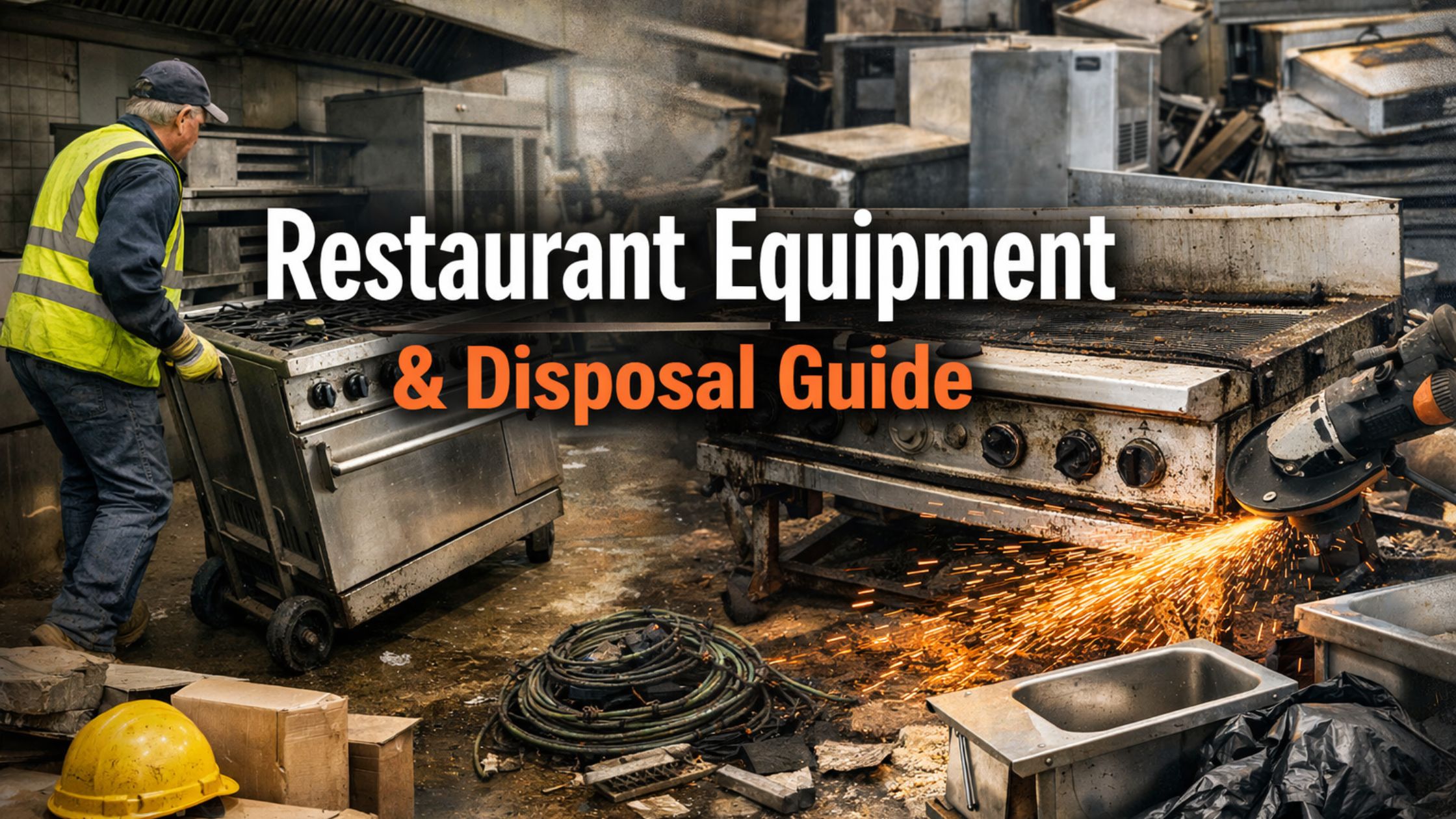

This guide walks you through the full process of removing and disposing of restaurant equipment in Springfield, Missouri. We cover what types of equipment you might be dealing with, how to handle hazardous materials like refrigerants and grease, local disposal regulations, donation options, and how to get the job done without wrecking your building or your budget.
Whether you’re a restaurant owner shutting down, a landlord clearing a former tenant’s space, or a property manager preparing a commercial unit for a new lease, this information applies directly to your situation.
Why Restaurant Equipment Removal Is Different From Regular Junk Removal
Restaurant equipment removal isn’t the same as hauling out old furniture or bagging up household clutter. Commercial kitchens contain heavy, bulky, and sometimes hazardous items that require specialized handling. Here’s what makes it different.
Weight and Size Challenges
A standard commercial refrigerator can weigh 400 to 800 pounds. Walk-in coolers and freezers are built into the structure of the building itself. Exhaust hood systems are bolted to walls and ceilings, connected to ductwork and fire suppression lines. Moving these items safely requires the right tools, the right crew, and a plan that protects the building from damage.
Most residential junk removal setups aren’t equipped for this kind of work. You need heavy-duty dollies, appliance straps, and sometimes cutting tools to disassemble equipment before it can leave the building.
Hazardous Materials and Regulatory Concerns
Commercial kitchen equipment often contains materials that can’t go into a standard landfill. Refrigerants in coolers and freezers are regulated under EPA guidelines. Grease traps hold fats, oils, and grease (FOG) that must be disposed of through licensed haulers. Older equipment may contain mercury thermostats or asbestos insulation.
In Springfield and across Greene County, improper disposal of these materials can lead to fines and environmental violations. The Missouri Department of Natural Resources (MDNR) enforces waste disposal standards that apply to commercial operations, and restaurant owners are responsible for compliance even during a shutdown.
Building and Utility Disconnections
Restaurant equipment is tied into electrical panels, gas lines, plumbing, and ventilation systems. Before anything gets moved, those connections need to be properly shut off and disconnected. Skipping this step creates serious safety risks — gas leaks, water damage, and electrical hazards are all real possibilities.
For Springfield business owners, it’s smart to coordinate with local utility providers and licensed contractors before starting the removal process.
Common Types of Restaurant Equipment That Need Removal
Every restaurant layout is different, but certain categories of equipment show up in nearly every commercial kitchen cleanout. Here’s a breakdown of what you’ll typically encounter.
Refrigeration Units
This includes reach-in coolers, walk-in coolers and freezers, prep refrigerators, and under-counter units. All of these contain refrigerants that must be recovered by a certified technician before disposal. In Springfield, several HVAC companies handle refrigerant recovery, and it’s a step that can’t be skipped legally or safely.
Cooking Equipment
Fryers, ranges, ovens, broilers, griddles, and steam tables all fall into this category. Gas-powered equipment must be disconnected from gas lines before removal. Many of these items are made from stainless steel and have scrap value, which can offset some of the removal cost.
Exhaust and Ventilation Systems
Commercial exhaust hoods, fans, and ductwork are typically bolted to the building structure. Removing them requires careful disassembly to avoid damaging walls, ceilings, and fire suppression connections. Grease buildup inside ductwork adds weight and creates a mess during removal.
Dishwashing and Sanitation Equipment
Commercial dishwashers, three-compartment sinks, hand sinks, and sanitizer dispensers are all plumbed into the building’s water supply and drain systems. Disconnecting them properly prevents water damage and ensures the plumbing is capped and sealed.
Furniture and Smallwares
Booths, tables, chairs, shelving, and miscellaneous smallwares like pots, pans, and utensils round out the list. While these items are easier to handle physically, the volume can be surprising. A full-service restaurant can produce several truckloads of furniture and smallwares alone.
Point-of-Sale and Technology Systems
POS terminals, display screens, security cameras, and wiring all need to be removed and disposed of properly. Electronics contain components that should be recycled through certified e-waste facilities rather than thrown in the trash.
Step-by-Step Process for Restaurant Equipment Removal
A successful restaurant equipment removal follows a logical sequence. Rushing through the process leads to building damage, safety incidents, and disposal problems. Here’s how to approach it the right way.
Step 1: Assess the Space and Create an Inventory
Before anything gets moved, walk through the entire space and document every piece of equipment. Note the size, weight, condition, and whether it’s connected to utilities. This inventory helps you plan the removal order, estimate the time and labor needed, and identify items that might have resale or donation value.
Step 2: Disconnect Utilities
Hire licensed professionals to disconnect gas, electrical, plumbing, and HVAC connections. In Springfield, this step often involves coordinating with City Utilities and licensed contractors. Never attempt to disconnect gas lines or electrical panels yourself — the liability and safety risks aren’t worth it.
Step 3: Remove Hazardous Materials First
Refrigerants, grease trap contents, mercury thermostats, and any other regulated materials should be removed before the main equipment extraction begins. Work with certified disposal services to handle these items in compliance with EPA and Missouri DNR standards.
Step 4: Disassemble What You Can
Exhaust hoods, walk-in cooler panels, and large shelving systems are much easier to move once they’re broken down into manageable sections. Disassembly also makes it safer to navigate through doorways, hallways, and loading areas.
Step 5: Remove Equipment in a Logical Order
Start with items farthest from the exit and work your way out. This prevents bottlenecks and keeps the path clear for moving heavy items. Protect floors and doorframes with padding or plywood to avoid damage during the removal process.
Step 6: Clean the Space
Once all equipment is out, the space needs a thorough cleaning. Grease residue, debris, and dust accumulate behind and under equipment for years. A clean space is essential whether you’re preparing for a new tenant, renovating, or finalizing a lease termination.
Step 7: Dispose of Everything Properly
Sort items into categories: scrap metal, recyclable electronics, donatable equipment, and landfill-bound waste. Each stream has its own handling requirements. We’ll cover disposal options in detail in the next section.
Disposal Options for Restaurant Equipment in Springfield, MO
Not everything from a restaurant cleanout goes to the same place. Responsible disposal means sorting items based on their condition, material, and local regulations. Here are the main disposal paths available in the Springfield area.
Scrap Metal Recycling
Stainless steel, aluminum, and copper from commercial kitchen equipment have scrap value. Fryers, prep tables, sinks, and shelving units are often worth recycling. Several scrap yards in the Springfield area accept commercial metals, and the payout can help offset removal costs. Prices fluctuate, but stainless steel consistently holds decent value.
Appliance and Equipment Resale
If equipment is still in working condition, resale is the best option both financially and environmentally. Used restaurant equipment dealers operate in the Springfield and broader southwest Missouri region. Online marketplaces can also connect you with buyers. Just be upfront about the condition of every item — honesty avoids disputes and returns.
Donation
Churches, nonprofits, community kitchens, and vocational programs in the Springfield area sometimes accept commercial kitchen equipment. Donating usable items keeps them out of the landfill and supports local organizations. Some donations may also qualify for tax deductions, though you’ll want to confirm that with your accountant.
E-Waste Recycling
POS systems, monitors, wiring, and other electronics should go through certified e-waste recyclers. Greene County and the City of Springfield periodically host e-waste collection events, and several local businesses accept electronics for recycling year-round.
Landfill Disposal
Items that can’t be recycled, resold, or donated end up at the landfill. In the Springfield metro area, the facility accepts commercial waste, but certain materials like refrigerants and FOG are prohibited. Make sure regulated materials are removed before hauling anything to the landfill to avoid rejection at the gate or fines.
Missouri Regulations and EPA Guidelines for Restaurant Equipment Disposal
Restaurant owners and property managers in Springfield need to be aware of both federal and state regulations that apply to equipment disposal. Ignorance isn’t a defense when violations result in fines.
EPA Refrigerant Recovery Requirements
Under Section 608 of the Clean Air Act, refrigerants must be recovered from cooling equipment before disposal. Only EPA-certified technicians can perform this work. Venting refrigerants into the atmosphere is illegal and carries fines of up to tens of thousands of dollars per violation.
Grease and FOG Disposal
Fats, oils, and grease from grease traps must be collected and disposed of by licensed waste haulers. Pouring FOG down drains violates local sewer ordinances and contributes to blockages in Springfield’s municipal sewer system. The Springfield Public Works department has specific guidelines for FOG disposal that apply to all food service establishments.
Missouri DNR Solid Waste Regulations
The Missouri Department of Natural Resources regulates solid waste disposal through a permitting system. Commercial waste generators, including restaurants undergoing cleanout, must use permitted disposal facilities. Illegal dumping in Greene County carries penalties that include fines and potential criminal charges.
Electronics Disposal
While Missouri doesn’t have a statewide e-waste recycling law, the EPA encourages responsible electronics disposal. Many components in POS systems and kitchen electronics contain lead, mercury, and other toxic materials that contaminate landfills over time. Recycling is the responsible choice.
How Much Does Restaurant Equipment Removal Cost?
Cost is one of the first questions restaurant owners and property managers ask. The honest answer is that it depends on several factors. We won’t throw out specific dollar amounts because every job is different, but here’s what influences the price.
Size and Volume of Equipment
A small café with a few coolers and a prep line costs less to clear than a full-service restaurant with walk-in coolers, a bar setup, and a banquet kitchen. The sheer volume of material drives the cost.
Weight and Accessibility
Heavy items that need to be carried up or down stairs, through narrow hallways, or out of basement kitchens take more time and labor. Accessibility challenges increase the cost.
Hazardous Material Handling
Refrigerant recovery, grease trap pumping, and e-waste recycling all add to the total. These services require specialized vendors and certifications, and they’re not optional.
Timeline and Urgency
If you need the space cleared in 48 hours versus two weeks, that urgency affects scheduling and crew allocation. Tight timelines typically come with a premium.
Salvage and Offset
Equipment with scrap or resale value can offset part of the removal cost. Stainless steel in particular tends to hold value, and working equipment sold to dealers or donated reduces the total haul-away volume.
Common Mistakes to Avoid During Restaurant Equipment Removal
Restaurant cleanouts go sideways when people cut corners or skip steps. Here are the mistakes we see most often in the Springfield area.
Attempting DIY removal of heavy equipment without proper tools or training. Commercial kitchen equipment is heavy, awkward, and connected to building systems. Injuries and building damage are common when untrained crews try to handle it.
Forgetting to recover refrigerants before disposing of cooling equipment. This is a federal violation and it’s easily preventable.
Dumping grease trap contents improperly. Pouring FOG into storm drains or dumpsters creates environmental contamination and violates Springfield sewer ordinances.
Ignoring electronics and just throwing POS systems and wiring in with general waste. E-waste contaminates landfills and should be recycled separately.
Not protecting the building during removal. Scratched floors, damaged doorframes, and broken walls add repair costs that could have been avoided with basic precautions like floor coverings and corner guards.
Failing to plan the removal sequence. Starting with items near the door and working backward creates traffic jams and slows the entire process down.
Who Should Handle Your Restaurant Equipment Removal?
You’ve got a few options when it comes to getting restaurant equipment out of a building. Each has trade-offs.
Doing It Yourself
This works for small operations with light equipment and no hazardous materials. But even then, you need a truck, a crew, and a disposal plan. For most restaurant cleanouts in Springfield, the DIY route creates more headaches than it solves.
Hiring a General Contractor
Contractors handle demolition and renovation, but equipment removal is often outside their scope. They may subcontract the work, which adds cost and coordination complexity.
Working With a Junk Removal and Cleanout Company
A professional junk removal and cleanout service handles the entire process — from inventory and disconnection coordination to hauling and disposal. This is the most efficient option for most restaurant closures, remodels, and lease turnovers. The right company will sort materials for recycling, handle donations, and make sure regulated items are disposed of properly. If you’re dealing with a commercial property that needs comprehensive clearing, specialized cleanout services are built for exactly this kind of work.
Preparing Your Space Before the Removal Crew Arrives
A little preparation on your end makes the removal process faster, safer, and cheaper. Here’s what you can do before the crew shows up.
Remove all personal items, paperwork, and anything you want to keep. Once the removal starts, the crew works fast. Anything left behind gets treated as part of the cleanout.
Empty all food, liquids, and perishable items from refrigeration units. Cleaning out spoiled food is unpleasant and time-consuming. Doing it ahead of time keeps the crew focused on equipment removal.
Ensure clear access to loading areas. Move vehicles, unlock gates, and confirm that the loading dock or exit path is unobstructed.
Provide any building access information the crew needs — alarm codes, keys, elevator access, and contact information for building management.
Share your inventory list and flag any items with known issues, like a cooler that’s leaking refrigerant or a fryer still connected to an active gas line.
Environmental Responsibility in Restaurant Equipment Disposal
Responsible disposal matters. Springfield’s growth over the past decade has brought more restaurants, more commercial kitchens, and more waste when those businesses close or renovate. How that waste is handled affects the local environment.
Recycling metals keeps valuable materials in circulation and reduces the demand for new mining and manufacturing. Donating working equipment extends the useful life of those items and keeps them out of the waste stream. Proper hazardous material disposal protects Springfield’s water supply, soil, and air quality.
Choosing a removal company that prioritizes recycling and donation over landfill disposal is one of the most impactful decisions you can make during a restaurant cleanout. Ask questions about their disposal process before hiring anyone.
Frequently Asked Questions About Restaurant Equipment Removal
How long does a full restaurant equipment removal take?
Most full-service restaurant cleanouts take one to three days depending on the size of the space, the amount of equipment, and accessibility. Smaller operations like coffee shops or fast-casual spots can often be cleared in a single day.
Can restaurant equipment be recycled?
Yes. Stainless steel, aluminum, copper, and other metals in commercial kitchen equipment are recyclable. Electronics should be recycled through certified e-waste facilities. Working equipment can be resold or donated to local organizations.
Do I need to disconnect utilities before the removal?
Yes. Gas, electrical, plumbing, and HVAC connections must be properly disconnected by licensed professionals before equipment can be safely removed. Attempting to move connected equipment creates serious safety hazards.
What happens to grease traps during a restaurant cleanout?
Grease trap contents must be pumped out and disposed of by a licensed waste hauler. Pouring fats, oils, and grease down drains or into dumpsters violates local sewer ordinances and can result in fines from Springfield Public Works.
Is it cheaper to remove restaurant equipment myself?
In most cases, the DIY route ends up costing more when you factor in truck rentals, labor, disposal fees, potential building damage, and the risk of regulatory fines for improper disposal. Professional removal companies handle all of these factors efficiently.
What should I do with equipment that still works?
Working equipment can be sold to used restaurant equipment dealers, listed on online marketplaces, or donated to churches, nonprofits, and community kitchens in the Springfield area. Donation may also qualify for a tax deduction.
Springfield’s Trusted Choice for Restaurant Equipment Removal
If you’re facing a restaurant cleanout in Springfield, Missouri, you don’t have to figure it all out alone.
Easy Cleanouts LLC offers junk removal, property cleanouts, and disaster cleanup across Springfield and the surrounding areas. From full restaurant equipment removal to commercial space clearing, the team handles the heavy lifting, disposal logistics, and proper recycling so you can focus on what comes next. Whether you’re a restaurant owner closing up, a landlord turning over a commercial unit along Glenstone Avenue, or a property manager clearing space near Commercial Street or the Midtown corridor, Easy Cleanouts LLC provides fast and affordable cleanout services built for Springfield’s business community.
Ready to get started? Contact Easy Cleanouts LLC today for a free estimate. The crew serves Springfield, Greene County, and surrounding southwest Missouri communities with reliable, same-week scheduling and straightforward pricing.