
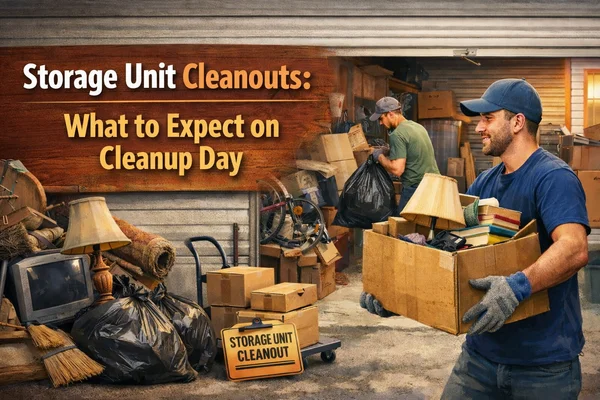
Whatever brought you here, cleaning out a storage unit can feel overwhelming. The good news is that once you know what to expect, the whole process becomes a lot more manageable. This guide walks you through everything that happens on cleanup day, from the first look inside to the final sweep of an empty unit.
Why Storage Units Become So Difficult to Clean Out
Before we get into cleanup day itself, it helps to understand why storage unit cleanouts can be such a challenge. Most people do not set out to create a cluttered storage unit. It happens gradually.
You rent the unit for a specific reason. Maybe you are moving and need temporary space. Maybe you inherited furniture you were not ready to part with. Maybe you just needed somewhere to put seasonal items or business inventory.
Then life gets busy. Months turn into years. You keep paying the monthly fee because dealing with what is inside feels like too much. Before long, you have boxes you have not opened in a decade and items you completely forgot you owned.
The other challenge is emotional. Storage units often hold items with sentimental value. Family heirlooms, photographs, possessions from loved ones who have passed away. Sorting through these things requires time and emotional energy that many people simply do not have on a random Tuesday afternoon.
Signs It Is Time for a Storage Unit Cleanout
Here are some common situations that push people to finally tackle their storage units.
The monthly cost no longer makes sense.
If you are paying $100 or more per month to store items worth less than a year of rent, the math stops working in your favor. Some Springfield residents discover they have been paying storage fees for five or ten years on items they could replace for less than a few months of rent.
You are dealing with an estate situation.
When a family member passes away, their storage unit becomes part of the estate. Families often face tight timelines to clear out these units while also dealing with grief and other responsibilities.
The storage facility requires it.
Missed payments can lead to lien sales where the storage company auctions off your belongings. Getting ahead of this situation saves you from losing items that matter and owing additional fees.
You are relocating.
Moving out of the Springfield area means deciding what stays and what goes. A storage unit cleanout forces those decisions before the moving truck arrives.
Preparing for Your Storage Unit Cleanout
A little preparation makes cleanup day go much smoother. Here is what to do before you arrive at the storage facility.
Gather Your Supplies
You will need sturdy work gloves, especially if you have not opened the unit in a while. Dust accumulates. Boxes deteriorate. Some items might be damaged or have attracted pests.
Bring trash bags, moving boxes or bins for items you want to keep, and markers for labeling. A flashlight helps since storage units often have limited lighting. Bottled water is a must during Missouri summers when temperatures inside those metal units can get brutal.
Set Realistic Expectations
How long does a storage unit cleanout take? That depends on the size of the unit and what is inside. A 5×5 unit might take an afternoon. A 10×20 unit packed floor to ceiling could require multiple days if you are sorting everything yourself.
Plan for more time than you think you need. Discovery takes longer than expected. Every box you open might contain items that trigger memories or require decisions about keeping, donating, or discarding.
Decide What Happens to Items Ahead of Time
The more decisions you can make before cleanup day, the faster the process goes. Think about your categories. What will you definitely keep? What can be donated? What needs to go to the landfill? Are there items valuable enough to sell?
Knowing your local donation centers helps too. Goodwill and other thrift stores in Springfield accept many household items, but they have limits. Furniture in poor condition, mattresses, and certain electronics often get turned away. Having a backup plan for those items saves frustration.
What Actually Happens on Cleanup Day
Here is a realistic breakdown of what to expect when you arrive to clean out your storage unit.
The Initial Assessment
First, you open the unit and take stock of what you are dealing with. This moment can be eye-opening, especially if years have passed since you last visited. Items may have shifted. Boxes might be water damaged. The contents might look completely different from how you remember them.
Take a few minutes to walk through what is visible before diving in. Look for any signs of pest activity, water damage, or structural problems. This quick assessment helps you plan your approach and identify anything that needs special handling.
Creating Work Zones
The most efficient approach involves setting up sorting areas outside the unit. Most storage facilities allow you to use the hallway or outdoor space near your unit as long as you do not block access for other renters.
Create separate zones for keep, donate, sell, and trash. As you pull items from the unit, immediately place them in the appropriate zone. This prevents the common problem of handling the same item multiple times and keeps the workflow moving.
The Sorting Process
Now comes the actual work. Start with the items closest to the door and work your way to the back. This systematic approach prevents the chaos of trying to reach things buried in the corners while tripping over stuff near the entrance.
Open every box. Check every container. Items stored in darkness for extended periods can deteriorate in unexpected ways. Clothing may be mildewed. Paper items might be damaged by humidity. Electronics from a decade ago may no longer function.
This part of the process is where people often get stuck. Seeing forgotten possessions brings up emotions and memories. Give yourself permission to take breaks when needed, but try not to let nostalgia derail the entire project.
Handling Different Types of Items
Storage units contain all kinds of things, and each category requires a slightly different approach.
Furniture and Large Items
Big pieces like couches, mattresses, dressers, and tables often make up a significant portion of storage unit contents. Evaluate these items honestly. Furniture that sat in a non-climate-controlled unit for years may have moisture damage, odors, or pest problems that are not worth fixing.
Quality wood furniture in good condition can be donated or sold. Particle board furniture that has absorbed moisture is usually trash. Mattresses are almost always trash unless they were stored in excellent conditions and still meet safety standards.
Clothing and Textiles
Fabric items are particularly vulnerable to storage conditions. Check carefully for mold, mildew, and pest damage. Even items that look fine might have developed odors that are difficult to remove.
Clothing in good condition can be donated. Items with damage beyond normal wear are better suited for textile recycling programs. Some Springfield area thrift stores accept fabric donations specifically for recycling purposes.
Electronics and Appliances
Old electronics present unique challenges. That television from 2008 is not worth keeping. The computer tower from your college years is obsolete. However, these items cannot go in regular trash due to the hazardous materials they contain.
Springfield has electronic waste disposal options through the city and various retailers. Best Buy, for example, accepts many types of electronics for recycling. Planning ahead for e-waste disposal prevents a pile of unusable electronics sitting in your driveway at the end of cleanup day.
Documents and Papers
Boxes of old paperwork are common in storage units. Tax records, bank statements, medical files, and other documents pile up over the years. Before discarding anything with personal information, consider shredding.
Many people discover important documents mixed in with junk mail and old magazines. Birth certificates, property deeds, and other vital records sometimes end up in storage. Check every box of papers carefully before disposing of anything.
Sentimental and Valuable Items
Family photographs, heirlooms, jewelry, and collectibles deserve special attention. These items might represent significant monetary or emotional value that is not immediately obvious.
If you are unsure about the value of antiques, artwork, or collectibles, set them aside for professional appraisal before making disposal decisions. What looks like junk could be worth serious money to the right collector.
Disposal Options for Unwanted Items
Once sorting is complete, you need to actually get rid of the items in your discard pile. Here are your main options.
Donation Centers
Springfield has several donation options including Goodwill, Salvation Army, and local thrift stores. Call ahead to confirm what they are currently accepting. Donation policies change, and some items that were accepted last year might be refused now.
Many donation centers will not accept furniture that needs repair, electronics older than a certain age, or items that do not meet current safety standards. Having a plan B for rejected donations prevents frustration.
Selling Items
If you have time and energy, selling valuable items can offset the cost of your cleanout. Facebook Marketplace, Craigslist, and local garage sales are options. Keep in mind that selling takes time. Photographing items, responding to inquiries, and arranging pickups adds work to an already demanding project.
Be realistic about what will actually sell versus what you hope will sell. That collection of magazines from the 1990s probably has no market. Vintage furniture in good condition might move quickly.
Landfill Disposal
Some items simply need to go to the dump. The City of Springfield operates transfer stations that accept household waste for a fee. Pricing is typically based on weight or load size.
If you have a large volume of trash, multiple trips to the landfill add up in time and dump fees. This is where many people decide that hiring professional help makes more financial sense than doing it themselves.
Common Challenges During Storage Unit Cleanouts
Even with good planning, certain problems commonly arise during storage unit cleanouts.
Pest Infestations
Mice, rats, insects, and spiders are unfortunately common in storage units that have been closed up for extended periods. Cardboard boxes provide nesting material. Forgotten food items attract pests.
If you discover significant pest activity, you may need to discard more items than planned. Anything with droppings, nests, or damage from chewing is generally not worth keeping. This is one situation where professional cleanout services have an advantage. Experienced crews know how to safely handle pest-contaminated materials.
Water and Mold Damage
Storage units can develop leaks from roofs, doors, or condensation buildup. Water damage often goes unnoticed until you open the unit and find boxes of ruined belongings. Mold grows quickly on damp materials and can spread to items that were not directly affected by water.
Items with visible mold growth typically need to be discarded. Trying to clean moldy furniture or textiles rarely works well and can expose you to health risks. When in doubt, throw it out.
Unexpected Hazardous Materials
You might find cans of old paint, automotive fluids, cleaning chemicals, or other hazardous materials in a storage unit. These cannot go in regular trash and require special disposal.
Greene County holds periodic household hazardous waste collection events. The city’s website lists current disposal options and locations. Setting aside hazardous materials during your cleanout and handling them separately is the safest approach.
Physical Demands
Cleaning out a storage unit is physically demanding work. Heavy lifting, bending, reaching, and moving boxes for hours takes a toll. The confined space makes the work harder. Summer heat inside a metal storage unit can be dangerous.
If you have physical limitations or health concerns, attempting a storage unit cleanout alone is not recommended. This is another situation where professional help makes a significant difference in safety and comfort.
DIY Cleanout vs Professional Services
Should you tackle your storage unit cleanout yourself or hire professionals? Both options have their place.
When DIY Makes Sense
A do-it-yourself approach works well when you have a small unit with items you want to sort carefully. If there are potentially valuable items mixed in or you want to make decisions about every single item, doing the work yourself gives you complete control.
DIY also makes sense when budget is the primary concern and you have the time, physical ability, and access to a truck or trailer for hauling. Similar strategies work for other home cleanout projects too. If you are tackling multiple areas of a property, you might find our room-by-room junk removal guide helpful for planning the full scope of work.
When to Consider Professional Help
Professional cleanout services make sense when time is limited. Estate situations with deadlines, upcoming moves, or storage facility requirements often create pressure that makes DIY impractical.
Large units, heavy items, and hazardous conditions also favor professional help. A trained crew with the right equipment can clear a packed 10×20 unit in hours rather than days. They handle the heavy lifting, disposal logistics, and hauling.
The process is similar to other property cleanout jobs like garage cleanouts where professionals know exactly what gets removed and how long the job takes. That predictability helps with planning and budgeting.
What Professional Cleanout Services Include
A reputable cleanout service handles the entire process. They arrive with the labor, trucks, and equipment needed to clear the unit. Items go to appropriate destinations, whether that is the landfill, recycling facilities, or donation centers.
Some services work with you on-site to separate items you want to keep. Others can perform complete cleanouts where everything goes, no questions asked. The right approach depends on your situation and preferences.
Safety Considerations for Storage Unit Cleanouts
Storage unit cleanouts come with safety risks that deserve attention.
Air Quality and Dust
Years of accumulated dust can trigger allergies and respiratory issues. A basic dust mask provides some protection, but a proper N95 respirator works better for dusty environments. If you have asthma or other respiratory conditions, take extra precautions.
Open the unit and let it air out before diving in. Running a fan to create airflow helps reduce dust exposure. These same precautions apply to other enclosed spaces like basements. Our guide to basement junk removal safety covers similar concerns for below-ground cleanouts.
Heavy Lifting Injuries
Back injuries are common during cleanout projects. Lift with your legs, not your back. Use a hand truck or dolly for heavy items. Ask for help with furniture and appliances. No box of old magazines is worth a herniated disc.
Take breaks before you get tired. Fatigue leads to sloppy lifting technique and accidents. Stay hydrated, especially during hot weather.
Sharp Objects and Hidden Hazards
Deteriorated boxes can collapse unexpectedly. Broken glass, rusty metal, and sharp edges hide inside containers. Always wear sturdy work gloves. Closed-toe shoes with good traction are essential.
Be cautious when moving items that have been stacked. Unstable piles can shift and fall. Similar hazards exist in attic spaces where the risks are even greater due to height and footing challenges. The dangers of DIY attic cleanouts apply to any elevated storage situation.
After the Cleanout: Final Steps
Once everything is out of the unit, a few final steps complete the process.
Clean and Sweep
Most storage facilities require you to return the unit in broom-clean condition. Sweep out any debris, dirt, or dust. Check corners and behind doors. Some facilities charge cleaning fees for units returned in poor condition.
Document and Close
Take photos of the empty unit before you lock up. This documentation protects you if there are any disputes about the condition. Then visit the office to officially close out your rental agreement. Make sure you get written confirmation that the account is closed and no further charges will apply.
Handle Remaining Items
If you have items waiting for donation, sale, or special disposal, follow through within a few days. Piles of stuff sitting in your garage or driveway have a way of becoming permanent if you do not deal with them promptly.
How Springfield Weather Affects Storage Unit Cleanouts
Missouri weather impacts both the condition of stored items and your ability to work comfortably.
Summer months bring extreme heat, especially inside metal storage units without climate control. Starting early in the morning helps beat the worst of the heat. Plan for frequent water breaks and watch for signs of heat exhaustion.
Winter cleanouts have their own challenges. Cold fingers make sorting small items difficult. Snow and ice create slippery conditions for loading trucks. Spring and fall typically offer the most comfortable conditions for this kind of work.
Items stored through multiple seasons of humidity and temperature swings often show more damage than those in climate-controlled facilities. Set realistic expectations for what may be salvageable, especially in older or outdoor storage units.
Working with Your Storage Facility
Good communication with your storage facility makes the cleanout process easier.
Let the office know you are planning a major cleanout. They may have specific rules about using common areas for sorting. Some facilities restrict the hours when large trucks can access the property. Knowing these rules ahead of time prevents conflicts.
Ask about dumpster availability. Some storage facilities have on-site dumpsters for tenant use. Others prohibit disposal on the property entirely. Understanding your options helps you plan the logistics.
If you are behind on payments, work out a plan with the facility before starting your cleanout. Some will allow access for cleanout purposes even on a delinquent account if you communicate and make arrangements.
Need Help with Your Springfield Storage Unit Cleanout?
Storage unit cleanouts do not have to be a solo project. If you are facing a large unit, tight deadline, or simply want the job done fast without the hassle, professional help is available right here in Springfield.
Easy Cleanout LLC provides junk removal, property cleanouts, and disaster cleanup services throughout the Springfield, Missouri area. We handle storage unit cleanouts of all sizes, from small units you have been putting off to large commercial spaces that need to be cleared quickly.
Our team arrives ready to work with the trucks, labor, and equipment to get the job done efficiently. We sort, haul, and dispose of unwanted items so you do not have to make multiple trips to the dump or coordinate with donation centers.
Whether you are dealing with an inherited storage unit, preparing for a move, or just ready to stop paying rent on stuff you no longer need, we can help. Our rates are fair, our service is fast, and we treat your belongings with respect throughout the process.
Contact Easy Cleanout LLC today for a free estimate on your storage unit cleanout. Serving Springfield, MO and surrounding communities with reliable, affordable property cleanout services.
Frequently Asked Questions About Storage Unit Cleanouts
How long does a storage unit cleanout take?
Time varies based on unit size and contents. A small 5×5 unit might take a few hours. A packed 10×20 unit could require multiple days for DIY cleanouts or several hours with a professional crew.
What should I do with items I cannot donate?
Items that donation centers reject typically go to the landfill. Springfield area transfer stations accept household waste for a fee. Electronics and hazardous materials require special disposal at designated facilities or collection events.
Can I hire someone to clean out a storage unit I inherited?
Yes. Professional cleanout services regularly handle estate storage units. You can be present to identify items to keep or authorize a complete cleanout where everything is removed.
What if I find valuable items during the cleanout?
Set aside anything that might have value for closer inspection or professional appraisal. Antiques, collectibles, jewelry, and artwork should be evaluated before disposal decisions are made.
Is it cheaper to do a storage unit cleanout myself?
Not always. Factor in your time, truck rental, dump fees, and multiple trips. For large units, professional services often cost less than the DIY approach when all expenses are calculated. You also avoid the physical strain and time commitment.