
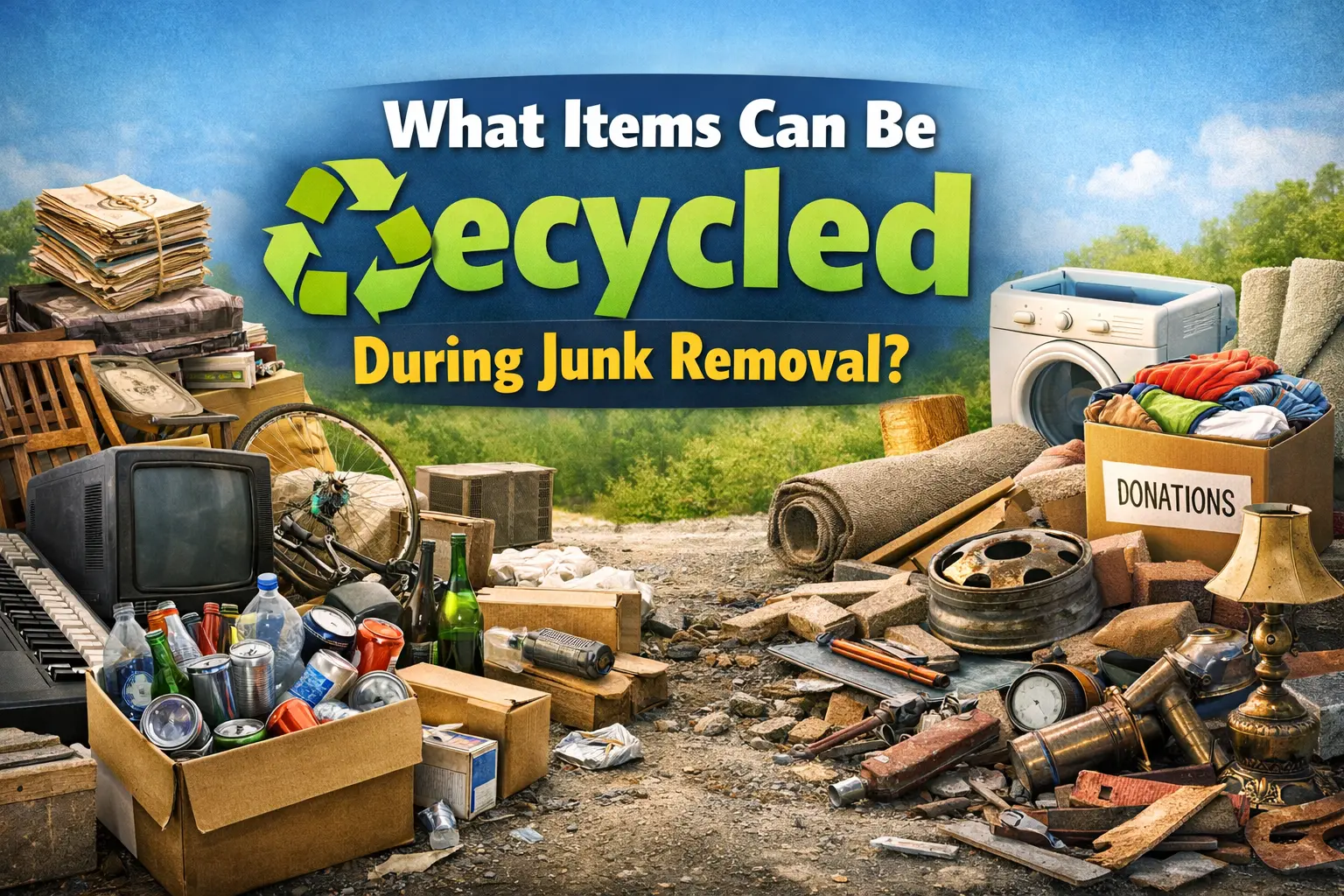
Most people don’t realize how much of their junk can actually be recycled. When you’re clearing out a home, garage, or business, it’s easy to assume everything goes straight to the landfill. But that’s not true.
Professional junk removal services can divert a surprising amount of material away from landfills. Metals, electronics, furniture, and even construction debris often get a second life through recycling and donation programs.
Understanding what can be recycled helps you make better decisions during cleanouts. It reduces environmental impact and supports your local community. Let’s break down the most common recyclable items and how they’re processed.
Why Recycling Matters During Junk Removal
Landfills are filling up faster than ever. The EPA estimates that Americans generate over 290 million tons of waste annually. A significant portion of that waste could be recycled or repurposed.
Recycling during junk removal reduces pollution and conserves natural resources. When materials like metal and plastic are recycled, manufacturers use less energy compared to producing new materials from scratch. This cuts carbon emissions and preserves raw materials.
Beyond environmental benefits, recycling creates jobs. Sorting facilities, refurbishment centers, and donation organizations employ thousands of people across the country. Supporting eco-friendly junk removal in Springfield MO means you’re contributing to both environmental and economic health.
And honestly, it just feels better knowing your old stuff isn’t rotting in a landfill when it could be useful elsewhere.
Metals: The Most Recyclable Junk Removal Material
Metal is one of the easiest materials to recycle during junk removal. Steel, aluminum, copper, and brass all have high recycling rates because they retain their properties even after multiple recycling cycles.
Common metal items removed during cleanouts include old appliances, bed frames, filing cabinets, pipes, wiring, and scrap metal from construction projects. These items are sorted by type and sent to metal recycling facilities where they’re melted down and reformed into new products.
Aluminum cans, for example, can be recycled and back on store shelves within 60 days. Steel from old appliances becomes rebar for construction or parts for new machines. Copper wiring gets repurposed into electrical components.
Professional junk removal services separate metals on-site or at sorting facilities. This ensures maximum recycling efficiency and keeps valuable materials out of landfills.
Electronics and E-Waste Recycling
Electronics contain valuable materials like gold, silver, copper, and rare earth elements. But they also contain hazardous substances like lead and mercury that shouldn’t end up in landfills.
E-waste includes computers, monitors, printers, televisions, cell phones, tablets, kitchen appliances with circuit boards, and audio equipment. These items require specialized recycling processes to extract valuable components and safely dispose of toxic materials.
Certified e-waste recyclers dismantle electronics piece by piece. Circuit boards are processed to recover precious metals. Plastic casings are shredded and recycled. Batteries are separated and handled according to hazardous waste protocols.
Many states have e-waste recycling laws that prohibit throwing electronics in regular trash. Working with a responsible junk removal company ensures your electronics are handled legally and ethically.
Some items can even be refurbished and donated. Working computers and monitors often find new homes with schools, nonprofits, or low-income families.
Appliances: From Refrigerators to Water Heaters
Large appliances are bulky and difficult to dispose of, but they’re highly recyclable. Refrigerators, washing machines, dryers, dishwashers, stoves, and water heaters contain significant amounts of metal and other recoverable materials.
Refrigerators and air conditioners require special handling because they contain refrigerants that must be recovered before recycling. Professional junk removal teams are trained to safely extract these chemicals according to EPA regulations.
Once refrigerants are removed, appliances are dismantled. Steel and aluminum are separated and sent to metal recyclers. Plastic components are sorted by type. Glass from oven doors gets recycled separately.
Water heaters typically contain steel tanks that are easy to recycle. The metal is melted down and used in new products. Some components can even be salvaged for repair work on similar units.
If your appliances still work, consider donation instead of recycling. Many charities accept functional appliances and provide them to families in need.
Furniture: Donation and Material Recovery
Not all furniture needs to end up in a landfill. Wood furniture can be refurbished, donated, or broken down for material recovery. Metal furniture gets recycled just like other scrap metal.
Upholstered furniture is trickier because it combines materials like wood frames, metal springs, foam padding, and fabric. But some recycling facilities can separate these components. Metals are recycled, wood is chipped for mulch or composite materials, and fabric may be repurposed.
Many junk removal companies partner with local charities and thrift stores. Furniture in good condition gets donated directly. This extends the item’s life and helps people who need affordable furnishings.
For damaged furniture, material recovery is the next best option. Hardwood from tables and chairs can become flooring or decorative items. Metal chair frames and bed springs go to scrap yards.
Before throwing out furniture, ask yourself if it could serve someone else. Even pieces that seem worn might be valuable to someone with different needs or aesthetic preferences.
Construction Debris and Building Materials
Construction and renovation projects generate massive amounts of debris. But much of this material can be recycled or reused instead of landfilled.
Concrete and asphalt are commonly recycled. They’re crushed and used as aggregate in new construction projects or as base material for roads and driveways. This process is called “concrete recycling” and it’s widely available.
Wood from demolition projects often gets chipped into mulch or processed into engineered wood products. Clean, untreated lumber can be salvaged for reuse in new construction or DIY projects.
Drywall can be recycled into new drywall or used as a soil amendment in agriculture. Metal components like nails, screws, brackets, and rebar are separated and sent to metal recyclers.
Roofing materials have recycling options too. Asphalt shingles can be ground up and mixed into new asphalt paving. Metal roofing goes straight to scrap yards.
Professional teams understand how construction debris is disposed of safely and efficiently. They separate materials on-site to maximize recycling rates and minimize landfill waste.
Glass and Plastics
Glass bottles, jars, and windows are infinitely recyclable. Glass doesn’t degrade during the recycling process, so it can be melted down and reformed countless times.
During junk removal, glass items are separated by color and type. Clear, green, and brown glass each get processed differently. Mirrors and window glass may have different recycling streams because they’re made with different formulations.
Plastics are more complicated. Different plastic types require different recycling processes, and they’re marked with resin codes (numbers 1-7 inside the recycling triangle). Not all plastics are accepted by all recycling programs.
Common recyclable plastics from junk removal include:
- PET bottles and containers (code 1)
- HDPE containers like milk jugs and detergent bottles (code 2)
- PVC pipes (code 3, though less commonly accepted)
- LDPE bags and films (code 4)
- PP containers and caps (code 5)
Mixed plastics and heavily contaminated plastics are harder to recycle. That’s why separation at the source matters so much.
Textiles and Clothing
Americans throw away about 85 pounds of textiles per person each year. Most of this could be reused or recycled instead.
Clothing in good condition can be donated to thrift stores, shelters, and clothing banks. Even damaged or worn textiles have value. They can be cut into rags for industrial use, shredded into fiber for insulation or carpet padding, or processed into new fabrics.
Shoes, belts, purses, and other accessories can also be donated or recycled. Some organizations specialize in collecting specific items like athletic shoes or formal wear.
Linens like sheets, towels, and curtains are often accepted by animal shelters if they’re too worn for human use. They make excellent bedding for shelter animals.
When you’re doing a cleanout, bag up textiles separately. This makes it easier for junk removal teams to route them to the right recycling or donation channels.
Mattresses and Box Springs
Mattresses are bulky and difficult to dispose of, but they’re surprisingly recyclable. A single mattress contains materials that can be separated and repurposed.
The steel springs inside mattresses are highly valuable scrap metal. Foam padding can be shredded and used in carpet padding or new foam products. Wood frames can be chipped into mulch. Fabric covering can be recycled into industrial rags.
Several cities now have mattress recycling programs because mattresses take up so much space in landfills. Professional junk removal companies often work with these programs to ensure proper recycling.
Box springs follow a similar recycling process. The wood frame and metal springs are separated and sent to appropriate recycling streams.
Some mattresses can be refurbished and donated if they’re in decent condition and meet health code requirements. This varies by location and organization.
Yard Waste and Organic Materials
Yard waste makes up a significant portion of residential junk removal. Grass clippings, leaves, branches, tree stumps, and brush can all be composted or converted into useful products.
Many municipalities offer yard waste collection programs. This material gets composted and turned into nutrient-rich soil amendments for agriculture and landscaping.
Larger wood from tree removal can be chipped into mulch or processed into firewood. Some recycling facilities even convert organic waste into biofuel through specialized processing.
Understanding what debris removal includes in Springfield MO helps you plan for yard cleanout projects. Professional teams can handle everything from leaf piles to fallen trees.
Composting organic materials keeps them out of landfills where they would generate methane, a potent greenhouse gas. It also creates valuable soil products that support local agriculture and gardening.
Hazardous Materials: Special Handling Required
Some items can’t go through normal recycling channels because they contain hazardous substances. These require special disposal methods to protect public health and the environment.
Common hazardous items include:
- Paint and solvents
- Pesticides and herbicides
- Motor oil and automotive fluids
- Batteries (car batteries, rechargeable batteries, button batteries)
- Fluorescent bulbs and CFLs (contain mercury)
- Cleaning chemicals
- Propane tanks
Many communities hold hazardous waste collection events where residents can drop off these items for safe disposal. Some retailers also accept specific hazardous items like batteries and bulbs.
Professional junk removal companies are trained to identify hazardous materials during cleanouts. They separate these items and ensure they’re disposed of according to local regulations.
Never mix hazardous materials with regular trash or recyclables. This can contaminate entire loads and create safety hazards for waste management workers.
Paper and Cardboard
Paper and cardboard are among the most commonly recycled materials. Office paper, newspapers, magazines, cardboard boxes, and paperboard packaging all have established recycling markets.
During estate cleanouts, inherited property cleanouts, or business closures, paper waste can pile up quickly. Old documents, files, books, and packaging materials should be separated for recycling.
Shredded paper can still be recycled, though some facilities prefer it bagged separately. Cardboard boxes should be flattened to save space during collection and transport.
Contaminated paper (greasy pizza boxes, paper towels, tissues) can’t be recycled through traditional channels. But some composting programs accept food-soiled paper products.
Books in good condition can be donated to libraries, schools, or literacy programs. Damaged books with intact pages can often be recycled as mixed paper.
Donation Opportunities During Cleanouts
Recycling isn’t the only way to keep items out of landfills. Donation extends the life of usable goods and supports your community.
Common donation items include:
- Clothing and shoes
- Furniture in good condition
- Working appliances
- Dishes, cookware, and kitchenware
- Books and media
- Toys and games
- Sports equipment
- Tools and hardware
Local charities, thrift stores, churches, and community organizations often accept donations. Some will even pick up large items directly from your property.
For real estate investors working on fix and flip cleanouts, donating salvageable items can provide tax deductions while clearing properties efficiently.
Professional junk removal companies maintain relationships with donation centers. They know what’s accepted, what’s not, and where items will do the most good.
What Professional Junk Removal Services Recycle
Reputable junk removal companies prioritize recycling and donation over landfill disposal. They understand what type of debris professionals can remove from your property and how to handle it responsibly.
A typical junk removal recycling process includes:
Sorting on-site or at a facility: Items are separated by material type (metal, wood, plastic, etc.) to ensure they go to the right recycling streams.
Partner relationships: Professional companies work with metal recyclers, e-waste processors, donation centers, and specialized recycling facilities to maximize diversion rates.
Documentation: Some companies provide recycling reports showing what percentage of your junk was recycled versus landfilled.
Proper disposal of hazardous materials: Licensed companies know how to handle and dispose of hazardous items according to local and federal regulations.
When you hire a junk removal service, ask about their recycling policies. Companies committed to sustainability will be transparent about where your items go and how they’re processed.
Recycling During Senior Downsizing and Estate Cleanouts
Senior downsizing cleanouts present unique opportunities for recycling and donation. Older homes often contain vintage items, antiques, and collectibles that have value beyond recycling.
Before recycling anything, consider:
- Could this be sold or donated to collectors?
- Do family members want any keepsakes?
- Is this item historically significant?
Many items from estate cleanouts can find new homes through:
- Antique dealers and consignment shops
- Online marketplaces for vintage goods
- Museum donation programs
- Historical societies
Items that aren’t valuable as collectibles still have recycling potential. Old tools, hardware, and metal items can be recycled. Vintage furniture can be refurbished or donated.
Professional junk removal teams experienced in estate work understand the difference between trash and treasure. They take time to identify potentially valuable items before sending anything to recycling or disposal.
How to Prepare Items for Recycling During Junk Removal
Proper preparation makes recycling easier and more efficient. Here are some tips for getting your junk ready:
Separate materials when possible: Keep metals separate from plastics, electronics separate from general trash, etc.
Empty containers: Rinse out bottles and jars if possible. Remove leftover food or liquids.
Remove batteries: Take batteries out of electronics before disposal. They require separate recycling.
Drain fluids: Empty appliances and equipment of water, oil, or other fluids.
Bundle similar items: Group like items together (all cords in one place, all metal in another).
Identify hazardous materials: Mark or separate items that need special handling like paint, chemicals, or fluorescent bulbs.
You don’t need to be perfect, but a little organization helps junk removal teams work more efficiently. It also ensures more of your items get recycled instead of landfilled.
Local Recycling Resources in Springfield, Missouri
Springfield residents have several recycling options for items that don’t fit in curbside bins.
The City of Springfield offers a drop-off recycling center where residents can bring materials like cardboard, paper, metal, and plastic. They also host periodic household hazardous waste collection events.
Habitat for Humanity ReStore accepts donations of building materials, furniture, appliances, and home goods. Items are resold to fund Habitat’s housing programs.
Goodwill and The Salvation Army accept clothing, furniture, household items, and more at multiple locations throughout Springfield.
For e-waste, several local businesses offer electronics recycling services. Some even provide data destruction for computers and hard drives.
Knowing your local resources helps you make informed decisions during cleanouts. Professional junk removal companies in the area are familiar with these facilities and can route your items accordingly.
Environmental Impact of Responsible Junk Removal
The environmental benefits of recycling during junk removal add up quickly. Consider the impact:
Energy savings: Recycling aluminum uses 95% less energy than producing new aluminum from raw ore. Recycling steel saves about 60% of production energy.
Resource conservation: Every ton of recycled paper saves 17 trees, 7,000 gallons of water, and 4,100 kilowatts of energy.
Pollution reduction: Manufacturing products from recycled materials generates less air and water pollution than using virgin materials.
Landfill space preservation: The average landfill has a lifespan of 30-50 years. Recycling extends that lifespan and reduces the need for new landfill sites.
Job creation: The recycling industry employs over 1.1 million people in the United States.
Every item diverted from a landfill makes a difference. When multiplied across thousands of cleanout projects, the environmental impact becomes significant.
Making Smart Choices During Your Cleanout
Recycling during junk removal doesn’t have to be complicated. Start by thinking about each item before you toss it.
Ask yourself:
- Can this be donated to someone who needs it?
- Does it contain recyclable materials?
- Is there a specialized recycling program for this item?
- Could this be sold instead of thrown away?
If you’re unsure, ask your junk removal company. Experienced professionals can quickly assess what’s recyclable and what’s not.
Planning ahead makes the process smoother. If you’re doing a major cleanout, schedule extra time to sort items. Create separate piles for donation, recycling, and trash.
And remember, hiring a professional service doesn’t mean you lose control over where your items go. You can request that certain things be donated or recycled specifically.
Easy Cleanouts LLC: Your Springfield Junk Removal Partner
When you need junk removal in Springfield, Missouri, Easy Cleanouts LLC handles your items responsibly. We prioritize recycling and donation to keep as much as possible out of landfills.
Our services include:
- Residential and commercial junk removal
- Complete property cleanouts
- Disaster cleanup and recovery
- Construction debris removal
- Appliance and furniture removal
- E-waste recycling coordination
We work with local recycling facilities, donation centers, and waste management programs to ensure your items are processed properly. Whether you’re clearing out a garage, renovating a property, or managing an estate cleanout, we handle the heavy lifting and responsible disposal.
Our team knows Springfield’s recycling landscape. We understand what materials local facilities accept and how to route items for maximum recycling rates.
Fast, affordable, and environmentally conscious—that’s how we approach every job. We provide upfront pricing, same-day service when available, and complete cleanout solutions for homes and businesses throughout Springfield and the surrounding area.
Contact Easy Cleanouts LLC today for professional junk removal that puts recycling and community support first. Let’s work together to keep Springfield clean and reduce our environmental footprint, one cleanout at a time.