
Understanding EPA and Missouri disposal guidelines isn’t just about avoiding fines. It’s about protecting your family, your neighbors, and the groundwater that runs beneath your property. These regulations exist because improper waste disposal has real consequences. Chemicals leach into soil. Toxins contaminate drinking water. And cleanup costs can run into thousands of dollars.
This guide breaks down what Springfield and Greene County homeowners need to know about properly disposing of different waste types. We’ll cover federal EPA requirements, Missouri-specific rules, and local resources that make compliance easier than you might expect.
What the EPA Considers Household Hazardous Waste
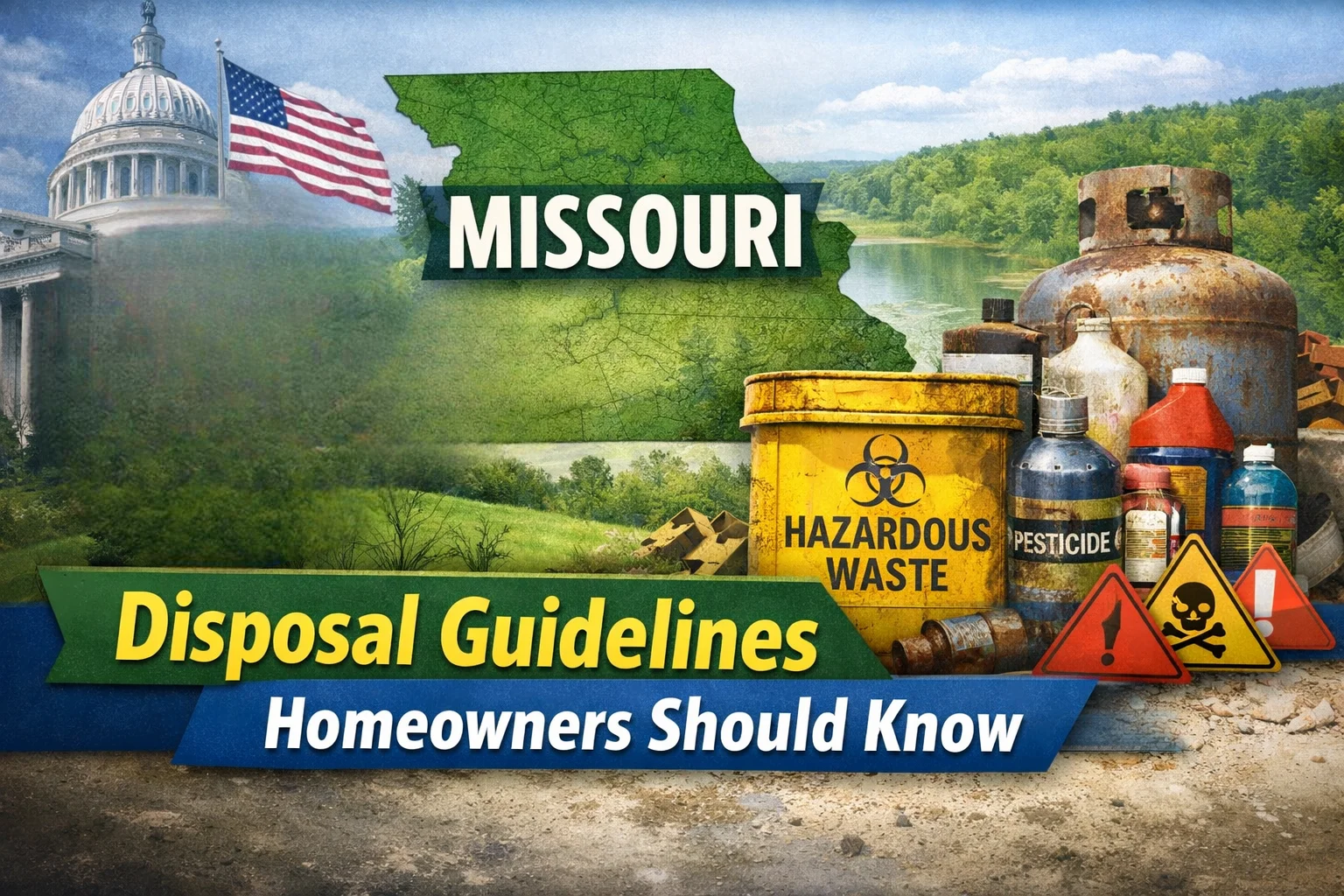
The Environmental Protection Agency defines household hazardous waste as any leftover product that can catch fire, react, explode, or is corrosive or toxic. That definition covers more everyday items than most people realize.
Common household hazardous waste includes paints, cleaners, oils, batteries, pesticides, and pool chemicals. Motor oil from your last oil change qualifies. So does the antifreeze sitting in your garage. Those aerosol cans under the bathroom sink? Potentially hazardous. The old thermometer with mercury in it? Definitely hazardous.
The EPA emphasizes that these products require special care during disposal. Pouring them down the drain, dumping them on the ground, or tossing them in storm sewers creates environmental hazards that can persist for decades. According to EPA guidelines, improper disposal can pollute the environment and pose immediate threats to human health.
Sanitation workers face physical injury risks when hazardous materials end up in regular trash. Septic tanks and wastewater treatment systems can become contaminated when chemicals go down drains. Children and pets face exposure risks when hazardous products are left around the house improperly.
The key principle is simple: if a product label contains words like “danger,” “warning,” “caution,” “toxic,” “flammable,” “corrosive,” or “reactive,” treat it as potentially hazardous waste.
Missouri’s Approach to Residential Waste Management
Missouri handles waste regulation through the Department of Natural Resources (DNR), which works alongside the EPA to enforce both federal and state requirements. The state has adopted most federal regulations but maintains some specific differences that homeowners should understand.
The Missouri Solid Waste Management Law provides the foundation for how residents can legally dispose of various waste types. Under this law, residential waste is defined as solid waste produced by routine household activities. This includes paper waste, food scraps, and garbage from daily activities.
Here’s what catches many homeowners off guard: home remodeling wastes, wastes from home businesses, durable goods like old appliances and furniture, and tires are not considered routine residential waste. These items have separate disposal requirements that we’ll cover in detail.
Missouri does allow some flexibility for rural homeowners. On-site disposal of certain solid waste is permitted if it meets specific criteria. The waste must result from your own residential activities on property you own or lawfully occupy. It cannot be disposed of in any surface water body or in areas where it could affect groundwater. And it must not create environmental hazards or public nuisances.
For homeowners in the Springfield-Greene County area, additional local regulations apply. Open burning rules, for example, are regulated by city and county entities rather than the state DNR. This means you need to check with local officials before burning any waste materials on your property.
Understanding Household Hazardous Waste in Missouri
Missouri follows EPA guidelines for household hazardous waste while providing state-specific disposal options. The DNR maintains a helpful approach: when no other options exist, household hazardous waste should be disposed of at your local solid waste landfill with regular trash rather than on your own property.
But that’s the last resort. The preferred approach involves these steps:
First, see if you can use up the product as intended. A half-empty container of lawn fertilizer isn’t waste if you apply it to your lawn. The same goes for cleaning products. Using them up eliminates the disposal problem entirely.
Second, consider whether someone else could use the product. Neighbors might need leftover paint in a color you no longer want. Community groups sometimes accept unopened products for their projects.
Third, look for manufacturer take-back programs or retail recycling options. Many auto parts stores accept used motor oil for recycling. Some hardware stores participate in paint recycling programs. Battery retailers often accept old batteries for proper disposal.
Fourth, use your local household hazardous waste collection facility or participate in community collection events. Springfield residents have access to the Household Chemical Collection Center, a regional facility serving Greene, Christian, Polk, Dallas, and Webster counties. This center accepts hazardous, toxic, and flammable items by appointment only.
The Springfield facility accepts automotive products, pesticides, household cleaners, aerosol cans, arts and crafts materials, and home improvement products including oil-based paints and stains. About 70% of materials received are reused or recycled rather than disposed of. To schedule an appointment, call 417-864-2000. The center operates on Tuesdays from 7 a.m. to 10 a.m. and Thursdays from 3 p.m. to 6 p.m.
If you’re dealing with a large property cleanout that involves substantial amounts of hazardous materials, understanding what types of debris professionals can remove from your property becomes particularly relevant.
Construction and Demolition Waste Rules
Home renovation and remodeling projects generate waste that falls outside normal residential disposal rules. Missouri DNR guidance applies to homeowners, not just contractors, when it comes to construction and demolition waste.
The state recognizes several categories of construction waste, each with different disposal requirements:
Clean fill material includes uncontaminated soil, rock, sand, gravel, concrete, asphaltic concrete, cinderblocks, brick, minimal amounts of wood and metal, and inert solids. These materials can often be reused for filling purposes without requiring disposal at a permitted facility.
Recovered materials like doors, windows, scrap metal, and asphalt shingles can be taken to recycling centers or reused in other projects. Before assuming materials are recyclable, research whether there’s actual demand for them in your area.
Regulated nonhazardous waste includes materials that don’t qualify as clean fill and aren’t suitable for recycling. Examples include insulation, drywall, wooden paneling, carpet padding, carpeting, and linoleum. These materials must be disposed of at a permitted solid waste landfill or processing facility.
Hazardous materials from older homes require special attention. Lead-based paint and universal wastes like mercury-containing thermostats and fluorescent light bulbs are the most common hazardous materials in demolition projects. Households are mostly exempt from hazardous waste requirements under Missouri law, but the exemption doesn’t remove the responsibility to handle these materials safely.
The penalties for improper disposal are significant. In Missouri, illegal disposal of construction and demolition waste by businesses is a Class D felony with fines up to $20,000. While homeowners face different standards than commercial operations, the environmental and health impacts remain the same regardless of who creates the violation.
If you’re tackling a home renovation, understanding how construction debris is disposed of safely can save you from costly mistakes and potential liability.
Electronics and E-Waste Disposal
Old televisions, computers, cell phones, and other electronic devices present unique disposal challenges. These items often contain hazardous substances including lead, mercury, cadmium, and other heavy metals. Older televisions and computer monitors with cathode ray tubes can contain an average of four pounds of lead per unit.
The EPA encourages segregating electronic waste from regular household trash to increase recycling rates and reduce landfill volume. Missouri doesn’t have a mandatory statewide e-waste recycling law, but that doesn’t mean electronics can simply go in the regular trash.
Many electronic components qualify as universal waste under federal regulations. Universal waste rules provide streamlined management requirements compared to full hazardous waste regulations, but still require proper handling and disposal.
Local options for electronics disposal include:
Drop-off locations at household hazardous waste facilities, including Springfield’s Household Chemical Collection Center, may accept residential electronics. Some retailers and manufacturers operate take-back programs for specific product categories. The EPA’s Earth911 database can help locate certified electronics recyclers in your area.
When dealing with electronics during a property cleanout, consider the age of the items. Devices manufactured before flat-panel technology became standard are more likely to contain significant amounts of hazardous materials. Computers, printers, and other equipment from businesses or home offices may have stricter disposal requirements.
Paint Disposal Guidelines
Paint is one of the most common household hazardous waste items, but disposal requirements differ significantly based on paint type.
Latex paint (water-based) can often be dried out and disposed of with regular trash. To dry latex paint, remove the lid and let it air dry in a well-ventilated area away from children and pets. You can speed up the process by adding kitty litter, sawdust, or commercial paint hardener. Once solidified, the dried paint can typically go in your regular trash.
Oil-based paint is a different matter entirely. These paints contain volatile organic compounds (VOCs) that can easily evaporate into the air and contaminate water sources. Oil-based paint must be disposed of at a collection center or through a paint retailer that accepts returns.
The DNR recommends checking PaintCare.org and Earth911 for paint drop-off locations in your area. Many Missouri communities also host periodic collection events specifically for paint and related products.
Paint residue from renovation projects, including chips and scrapings, should be tested before disposal if there’s any chance the original paint contained lead or other heavy metals. Homes built before 1978 have a significant likelihood of containing lead-based paint. The appropriate test method is the Toxicity Characteristic Leaching Procedure (TCLP).
Battery Disposal Requirements
Different battery types require different disposal approaches:
Single-use alkaline batteries (AA, AAA, C, D, 9-volt) can generally go in regular trash in Missouri, though recycling is preferred when available.
Rechargeable batteries including lithium-ion, nickel-cadmium, and nickel-metal hydride batteries should be recycled. Many retailers that sell rechargeable batteries accept them for recycling through programs like Call2Recycle.
Car batteries (lead-acid) are banned from Missouri landfills and must be recycled. Most auto parts stores and service centers accept used car batteries, often providing a credit toward new battery purchases.
Button batteries found in watches, hearing aids, and small electronics contain mercury or silver and should go to household hazardous waste collection facilities.
The key concern with batteries is fire risk. Lithium-ion batteries in particular can cause fires if damaged or improperly stored. When collecting batteries for disposal, tape the terminals of larger batteries to prevent short circuits and store them in a cool, dry place until you can properly dispose of them.
Appliance and Bulky Item Disposal
Large appliances like refrigerators, freezers, air conditioners, and dehumidifiers contain refrigerants that must be properly recovered before disposal. Federal law prohibits knowingly venting refrigerants into the atmosphere, and penalties apply even to homeowners.
When disposing of appliances containing refrigerants, use services that certify refrigerant recovery. Many scrap metal dealers and appliance retailers offer proper disposal services. Some municipal recycling programs accept appliances with proper scheduling.
Appliances without refrigerants, like washers, dryers, and stoves, can typically go to scrap metal dealers or be picked up through special collection services. Check with your local solid waste management district for available options.
For properties with accumulated appliances and bulky items from estate situations or hoarding, professional junk, trash, and debris removal services can handle proper disposal while ensuring compliance with applicable regulations.
Open Burning Rules in Springfield and Greene County
Many homeowners assume they can burn unwanted materials on their property. In rural Missouri, open burning of residential solid waste is generally allowed on the site where waste was generated, provided it doesn’t violate local ordinances.
But Springfield and Greene County fall under special regulations. Open burning in this area is regulated by city and county entities rather than the state DNR. Within city limits, open burning restrictions are significantly tighter than in rural areas.
What can and cannot be burned matters regardless of location:
Materials that may be burned (where permitted): Untreated wood, yard waste, and vegetative materials originating from the property.
Materials that cannot be burned: Tires, plastics, synthetic materials, asphalt shingles, treated wood, coated construction materials, and any materials that may generate toxic fumes. Burning these items can release dioxins, volatile organic compounds, and hydrogen chloride, causing skin and eye irritation, respiratory problems, and central nervous system issues for nearby residents.
Before burning anything, contact the Springfield Fire Department and check current burn restrictions. Air quality conditions can affect whether burning is permitted on any given day. And remember that multi-family dwellings like apartments and condominiums face additional restrictions on open burning.
Property Disclosure Requirements
If you’re selling property in Missouri, state law requires disclosure of any solid waste disposal areas on the property. Under §260.213 of the Missouri Solid Waste Management Law, anyone selling, conveying, or transferring property that contains a solid waste disposal site must disclose this information to potential buyers early in the negotiation process.
This applies whether the waste is buried or not. Even if previous owners disposed of waste on the property decades ago, the disclosure requirement still applies. Failure to disclose can result in legal liability after the sale closes.
For buyers, this means asking direct questions about any on-site waste disposal during property inspections. For sellers, it means addressing any disposal areas before listing or being prepared to disclose their presence and potential implications.
When preparing a property for sale after an estate situation, addressing accumulated waste and debris becomes crucial for both legal compliance and maximizing property value. Understanding how to clean out an inherited property to sell quickly can help navigate these requirements while protecting your interests.
Asbestos Concerns for Homeowners
Homes built before 1980 may contain asbestos in various materials including insulation, floor tiles, roofing, siding, and pipe wrapping. While undisturbed asbestos doesn’t pose immediate health risks, renovation and demolition activities can release dangerous fibers into the air.
Missouri requires asbestos inspections by certified inspectors before demolition or renovation of commercial, institutional, industrial, and residential structures with more than four living units. Single-family homes aren’t subject to mandatory inspections, but that doesn’t mean asbestos isn’t present or isn’t dangerous.
Homeowners tackling DIY renovations should learn to identify potential asbestos-containing materials and test suspicious materials before disturbing them. Asbestos testing kits are available, but professional testing provides more reliable results.
If asbestos is confirmed, removal should be handled by certified asbestos abatement contractors who have proper equipment and training to prevent fiber release. The cost of professional abatement is far less than the cost of asbestos-related health problems or contaminating your home with airborne fibers.
Asbestos-containing materials cannot be burned and must be disposed of at permitted landfills equipped to handle this hazardous material.
Tire Disposal in Missouri
Tires are banned from Missouri landfills and cannot be burned or buried on residential property. This creates disposal challenges since most households accumulate old tires over time, especially in rural areas.
Proper tire disposal options include:
Taking tires to local tire retailers, many of which accept old tires for a fee when you purchase new ones. Some retailers accept tires without a purchase, though fees may be higher.
Using permitted scrap tire haulers who transport tires to facilities where they’re recycled into products like playground surfaces, road materials, and fuel.
Participating in community tire collection events organized by solid waste management districts.
If you’ve accumulated more than 500 tires on a property, contact the Missouri DNR Waste Management Program at 800-361-4827 or 573-751-5401 for guidance on proper management and disposal requirements.
Motor Oil and Automotive Fluids
Used motor oil is one of the easiest household hazardous wastes to recycle properly. Most auto parts stores, service stations, and quick-lube facilities accept used motor oil for recycling. Many also accept transmission fluid, brake fluid, and other automotive fluids.
When handling used oil:
Store it in clean, leak-proof containers with tight-fitting lids. Don’t mix oil with other fluids, as this can contaminate the oil and make recycling impossible. Keep containers away from heat sources and out of reach of children and pets. Transport carefully to prevent spills.
Antifreeze is toxic to pets and children but can also be recycled. Some service stations and repair shops accept used antifreeze. Never pour antifreeze down drains or onto the ground, as it can contaminate water supplies.
Gasoline and diesel fuel require more careful handling. Small amounts of contaminated fuel may be accepted at household hazardous waste facilities. Larger quantities may require commercial disposal services.
Environmental Responsibility and Eco-Friendly Options
Beyond simply meeting regulatory requirements, many homeowners are looking for disposal options that minimize environmental impact. The traditional disposal hierarchy of reduce, reuse, and recycle remains the most effective approach.
Reducing waste means buying only what you need, choosing products with less packaging, and avoiding hazardous products when safer alternatives exist. The EPA’s Safer Choice program identifies cleaning products and other household items that meet environmental and health criteria.
Reusing materials extends product life and reduces disposal needs. Building material reuse centers accept usable materials from renovation projects. Donation centers take working appliances and furniture. Online marketplaces help connect people who have materials with people who need them.
Recycling diverts materials from landfills and recovers valuable resources. Springfield’s recycling centers accept aluminum, cardboard, glass, paper, plastic, tin, and yard waste. The city’s Waste Wizard tool helps residents determine proper disposal methods for specific items.
For homeowners prioritizing environmental responsibility, exploring eco-friendly junk removal options in Springfield MO can help ensure materials are handled responsibly.
Springfield Area Resources for Homeowners
Springfield and Greene County residents have access to several resources for proper waste disposal:
Springfield Sanitary Landfill (3545 W. Farm Road 34, Willard) accepts municipal solid waste and other non-hazardous materials. Contact 417-864-2006 for information on accepted materials and current fees.
Household Chemical Collection Center accepts hazardous household materials by appointment. Call 417-864-2000 to schedule. The center serves residents of Greene, Christian, Polk, Dallas, and Webster counties.
Recycling Drop-off Sites are located throughout Springfield, including the Lone Pine Avenue Recycling Center (3020 S. Lone Pine Ave.) and Franklin Avenue Recycling Center (731 N. Franklin). These accept aluminum, cardboard, glass, paper, plastic, tin, and yard waste.
Yardwaste Recycling Center accepts leaves, brush, sticks, and organic holiday decorations for composting.
Missouri DNR Southwest Regional Office in Springfield (417-891-4300) can answer questions about solid waste regulations, open burning permits, and other environmental concerns.
Environmental Resource Center (290 East Central Street, Springfield) provides education and resources about waste management. Contact 417-864-2006.
The city’s Waste Wizard tool (available at springfieldmo.gov) helps residents search for proper disposal methods for specific items.
When Professional Help Makes Sense
Some waste disposal situations exceed what homeowners can reasonably handle themselves. Large cleanouts, properties with accumulated hazardous materials, and situations involving contamination or unsafe conditions often require professional assistance.
Professional junk removal and cleanout services understand local regulations and maintain relationships with proper disposal facilities. They can identify materials requiring special handling and ensure everything is disposed of according to applicable laws.
Situations that typically benefit from professional help include:
Estate cleanouts with accumulated belongings spanning decades, where hazardous materials may be mixed with general household items. Hoarding situations where unsafe conditions make sorting and disposal dangerous. Properties being prepared for sale where proper disposal affects both legal compliance and property value. Post-disaster cleanup where contaminated materials require specialized handling.
Understanding what debris removal includes in Springfield MO helps set appropriate expectations for professional services.
Get Help With Your Springfield Property Cleanout
Navigating EPA and Missouri disposal guidelines takes time and attention to detail. When you’re facing a large cleanout project, the logistics of proper disposal can feel overwhelming on top of everything else you’re managing.
Easy Cleanouts LLC provides professional junk removal, property cleanouts, and disaster cleanup services throughout Springfield, Missouri. Our team understands local disposal requirements and maintains relationships with proper facilities for all types of materials, from routine household items to hazardous waste that needs special handling.
Whether you’re clearing out an inherited property, preparing a home for sale, or dealing with years of accumulated belongings, we handle the heavy lifting and disposal logistics so you don’t have to worry about compliance issues.
Our services include full property cleanouts, garage and basement clearing, appliance removal, construction debris hauling, and estate cleanout services. We work efficiently to minimize disruption while ensuring all materials reach appropriate disposal or recycling facilities.
Contact Easy Cleanouts LLC today for a free estimate on your Springfield area cleanout project. Fast, affordable service with the expertise to handle proper disposal from start to finish.
EPA & Missouri Disposal Guidelines Homeowners Should Know
SEO Title: EPA & Missouri Disposal Guidelines Homeowners Should Know (2025)
Meta Description: Learn essential EPA and Missouri disposal guidelines for homeowners. Covers hazardous waste, construction debris, electronics, and Springfield MO resources.
Cleaning out a garage, renovating a bathroom, or handling an estate cleanout sounds simple enough. But then you come across half-empty paint cans, old batteries, a broken television, and leftover pesticides from last summer. Suddenly, you’re wondering what can go in the trash and what might land you in hot water with environmental regulations.
Understanding EPA and Missouri disposal guidelines isn’t just about avoiding fines. It’s about protecting your family, your neighbors, and the groundwater that runs beneath your property. These regulations exist because improper waste disposal has real consequences. Chemicals leach into soil. Toxins contaminate drinking water. And cleanup costs can run into thousands of dollars.
This guide breaks down what Springfield and Greene County homeowners need to know about properly disposing of different waste types. We’ll cover federal EPA requirements, Missouri-specific rules, and local resources that make compliance easier than you might expect.
What the EPA Considers Household Hazardous Waste
The Environmental Protection Agency defines household hazardous waste as any leftover product that can catch fire, react, explode, or is corrosive or toxic. That definition covers more everyday items than most people realize.
Common household hazardous waste includes paints, cleaners, oils, batteries, pesticides, and pool chemicals. Motor oil from your last oil change qualifies. So does the antifreeze sitting in your garage. Those aerosol cans under the bathroom sink? Potentially hazardous. The old thermometer with mercury in it? Definitely hazardous.
The EPA emphasizes that these products require special care during disposal. Pouring them down the drain, dumping them on the ground, or tossing them in storm sewers creates environmental hazards that can persist for decades. According to EPA guidelines, improper disposal can pollute the environment and pose immediate threats to human health.
Sanitation workers face physical injury risks when hazardous materials end up in regular trash. Septic tanks and wastewater treatment systems can become contaminated when chemicals go down drains. Children and pets face exposure risks when hazardous products are left around the house improperly.
The key principle is simple: if a product label contains words like “danger,” “warning,” “caution,” “toxic,” “flammable,” “corrosive,” or “reactive,” treat it as potentially hazardous waste.
Missouri’s Approach to Residential Waste Management
Missouri handles waste regulation through the Department of Natural Resources (DNR), which works alongside the EPA to enforce both federal and state requirements. The state has adopted most federal regulations but maintains some specific differences that homeowners should understand.
The Missouri Solid Waste Management Law provides the foundation for how residents can legally dispose of various waste types. Under this law, residential waste is defined as solid waste produced by routine household activities. This includes paper waste, food scraps, and garbage from daily activities.
Here’s what catches many homeowners off guard: home remodeling wastes, wastes from home businesses, durable goods like old appliances and furniture, and tires are not considered routine residential waste. These items have separate disposal requirements that we’ll cover in detail.
Missouri does allow some flexibility for rural homeowners. On-site disposal of certain solid waste is permitted if it meets specific criteria. The waste must result from your own residential activities on property you own or lawfully occupy. It cannot be disposed of in any surface water body or in areas where it could affect groundwater. And it must not create environmental hazards or public nuisances.
For homeowners in the Springfield-Greene County area, additional local regulations apply. Open burning rules, for example, are regulated by city and county entities rather than the state DNR. This means you need to check with local officials before burning any waste materials on your property.
Understanding Household Hazardous Waste in Missouri
Missouri follows EPA guidelines for household hazardous waste while providing state-specific disposal options. The DNR maintains a helpful approach: when no other options exist, household hazardous waste should be disposed of at your local solid waste landfill with regular trash rather than on your own property.
But that’s the last resort. The preferred approach involves these steps:
First, see if you can use up the product as intended. A half-empty container of lawn fertilizer isn’t waste if you apply it to your lawn. The same goes for cleaning products. Using them up eliminates the disposal problem entirely.
Second, consider whether someone else could use the product. Neighbors might need leftover paint in a color you no longer want. Community groups sometimes accept unopened products for their projects.
Third, look for manufacturer take-back programs or retail recycling options. Many auto parts stores accept used motor oil for recycling. Some hardware stores participate in paint recycling programs. Battery retailers often accept old batteries for proper disposal.
Fourth, use your local household hazardous waste collection facility or participate in community collection events. Springfield residents have access to the Household Chemical Collection Center, a regional facility serving Greene, Christian, Polk, Dallas, and Webster counties. This center accepts hazardous, toxic, and flammable items by appointment only.
The Springfield facility accepts automotive products, pesticides, household cleaners, aerosol cans, arts and crafts materials, and home improvement products including oil-based paints and stains. About 70% of materials received are reused or recycled rather than disposed of. To schedule an appointment, call 417-864-2000. The center operates on Tuesdays from 7 a.m. to 10 a.m. and Thursdays from 3 p.m. to 6 p.m.
If you’re dealing with a large property cleanout that involves substantial amounts of hazardous materials, understanding what types of debris professionals can remove from your property becomes particularly relevant.
Construction and Demolition Waste Rules
Home renovation and remodeling projects generate waste that falls outside normal residential disposal rules. Missouri DNR guidance applies to homeowners, not just contractors, when it comes to construction and demolition waste.
The state recognizes several categories of construction waste, each with different disposal requirements:
Clean fill material includes uncontaminated soil, rock, sand, gravel, concrete, asphaltic concrete, cinderblocks, brick, minimal amounts of wood and metal, and inert solids. These materials can often be reused for filling purposes without requiring disposal at a permitted facility.
Recovered materials like doors, windows, scrap metal, and asphalt shingles can be taken to recycling centers or reused in other projects. Before assuming materials are recyclable, research whether there’s actual demand for them in your area.
Regulated nonhazardous waste includes materials that don’t qualify as clean fill and aren’t suitable for recycling. Examples include insulation, drywall, wooden paneling, carpet padding, carpeting, and linoleum. These materials must be disposed of at a permitted solid waste landfill or processing facility.
Hazardous materials from older homes require special attention. Lead-based paint and universal wastes like mercury-containing thermostats and fluorescent light bulbs are the most common hazardous materials in demolition projects. Households are mostly exempt from hazardous waste requirements under Missouri law, but the exemption doesn’t remove the responsibility to handle these materials safely.
The penalties for improper disposal are significant. In Missouri, illegal disposal of construction and demolition waste by businesses is a Class D felony with fines up to $20,000. While homeowners face different standards than commercial operations, the environmental and health impacts remain the same regardless of who creates the violation.
If you’re tackling a home renovation, understanding how construction debris is disposed of safely can save you from costly mistakes and potential liability.
Electronics and E-Waste Disposal
Old televisions, computers, cell phones, and other electronic devices present unique disposal challenges. These items often contain hazardous substances including lead, mercury, cadmium, and other heavy metals. Older televisions and computer monitors with cathode ray tubes can contain an average of four pounds of lead per unit.
The EPA encourages segregating electronic waste from regular household trash to increase recycling rates and reduce landfill volume. Missouri doesn’t have a mandatory statewide e-waste recycling law, but that doesn’t mean electronics can simply go in the regular trash.
Many electronic components qualify as universal waste under federal regulations. Universal waste rules provide streamlined management requirements compared to full hazardous waste regulations, but still require proper handling and disposal.
Local options for electronics disposal include:
Drop-off locations at household hazardous waste facilities, including Springfield’s Household Chemical Collection Center, may accept residential electronics. Some retailers and manufacturers operate take-back programs for specific product categories. The EPA’s Earth911 database can help locate certified electronics recyclers in your area.
When dealing with electronics during a property cleanout, consider the age of the items. Devices manufactured before flat-panel technology became standard are more likely to contain significant amounts of hazardous materials. Computers, printers, and other equipment from businesses or home offices may have stricter disposal requirements.
Paint Disposal Guidelines
Paint is one of the most common household hazardous waste items, but disposal requirements differ significantly based on paint type.
Latex paint (water-based) can often be dried out and disposed of with regular trash. To dry latex paint, remove the lid and let it air dry in a well-ventilated area away from children and pets. You can speed up the process by adding kitty litter, sawdust, or commercial paint hardener. Once solidified, the dried paint can typically go in your regular trash.
Oil-based paint is a different matter entirely. These paints contain volatile organic compounds (VOCs) that can easily evaporate into the air and contaminate water sources. Oil-based paint must be disposed of at a collection center or through a paint retailer that accepts returns.
The DNR recommends checking PaintCare.org and Earth911 for paint drop-off locations in your area. Many Missouri communities also host periodic collection events specifically for paint and related products.
Paint residue from renovation projects, including chips and scrapings, should be tested before disposal if there’s any chance the original paint contained lead or other heavy metals. Homes built before 1978 have a significant likelihood of containing lead-based paint. The appropriate test method is the Toxicity Characteristic Leaching Procedure (TCLP).
Battery Disposal Requirements
Different battery types require different disposal approaches:
Single-use alkaline batteries (AA, AAA, C, D, 9-volt) can generally go in regular trash in Missouri, though recycling is preferred when available.
Rechargeable batteries including lithium-ion, nickel-cadmium, and nickel-metal hydride batteries should be recycled. Many retailers that sell rechargeable batteries accept them for recycling through programs like Call2Recycle.
Car batteries (lead-acid) are banned from Missouri landfills and must be recycled. Most auto parts stores and service centers accept used car batteries, often providing a credit toward new battery purchases.
Button batteries found in watches, hearing aids, and small electronics contain mercury or silver and should go to household hazardous waste collection facilities.
The key concern with batteries is fire risk. Lithium-ion batteries in particular can cause fires if damaged or improperly stored. When collecting batteries for disposal, tape the terminals of larger batteries to prevent short circuits and store them in a cool, dry place until you can properly dispose of them.
Appliance and Bulky Item Disposal
Large appliances like refrigerators, freezers, air conditioners, and dehumidifiers contain refrigerants that must be properly recovered before disposal. Federal law prohibits knowingly venting refrigerants into the atmosphere, and penalties apply even to homeowners.
When disposing of appliances containing refrigerants, use services that certify refrigerant recovery. Many scrap metal dealers and appliance retailers offer proper disposal services. Some municipal recycling programs accept appliances with proper scheduling.
Appliances without refrigerants, like washers, dryers, and stoves, can typically go to scrap metal dealers or be picked up through special collection services. Check with your local solid waste management district for available options.
For properties with accumulated appliances and bulky items from estate situations or hoarding, professional junk, trash, and debris removal services can handle proper disposal while ensuring compliance with applicable regulations.
Open Burning Rules in Springfield and Greene County
Many homeowners assume they can burn unwanted materials on their property. In rural Missouri, open burning of residential solid waste is generally allowed on the site where waste was generated, provided it doesn’t violate local ordinances.
But Springfield and Greene County fall under special regulations. Open burning in this area is regulated by city and county entities rather than the state DNR. Within city limits, open burning restrictions are significantly tighter than in rural areas.
What can and cannot be burned matters regardless of location:
Materials that may be burned (where permitted): Untreated wood, yard waste, and vegetative materials originating from the property.
Materials that cannot be burned: Tires, plastics, synthetic materials, asphalt shingles, treated wood, coated construction materials, and any materials that may generate toxic fumes. Burning these items can release dioxins, volatile organic compounds, and hydrogen chloride, causing skin and eye irritation, respiratory problems, and central nervous system issues for nearby residents.
Before burning anything, contact the Springfield Fire Department and check current burn restrictions. Air quality conditions can affect whether burning is permitted on any given day. And remember that multi-family dwellings like apartments and condominiums face additional restrictions on open burning.
Property Disclosure Requirements
If you’re selling property in Missouri, state law requires disclosure of any solid waste disposal areas on the property. Under §260.213 of the Missouri Solid Waste Management Law, anyone selling, conveying, or transferring property that contains a solid waste disposal site must disclose this information to potential buyers early in the negotiation process.
This applies whether the waste is buried or not. Even if previous owners disposed of waste on the property decades ago, the disclosure requirement still applies. Failure to disclose can result in legal liability after the sale closes.
For buyers, this means asking direct questions about any on-site waste disposal during property inspections. For sellers, it means addressing any disposal areas before listing or being prepared to disclose their presence and potential implications.
When preparing a property for sale after an estate situation, addressing accumulated waste and debris becomes crucial for both legal compliance and maximizing property value. Understanding how to clean out an inherited property to sell quickly can help navigate these requirements while protecting your interests.
Asbestos Concerns for Homeowners
Homes built before 1980 may contain asbestos in various materials including insulation, floor tiles, roofing, siding, and pipe wrapping. While undisturbed asbestos doesn’t pose immediate health risks, renovation and demolition activities can release dangerous fibers into the air.
Missouri requires asbestos inspections by certified inspectors before demolition or renovation of commercial, institutional, industrial, and residential structures with more than four living units. Single-family homes aren’t subject to mandatory inspections, but that doesn’t mean asbestos isn’t present or isn’t dangerous.
Homeowners tackling DIY renovations should learn to identify potential asbestos-containing materials and test suspicious materials before disturbing them. Asbestos testing kits are available, but professional testing provides more reliable results.
If asbestos is confirmed, removal should be handled by certified asbestos abatement contractors who have proper equipment and training to prevent fiber release. The cost of professional abatement is far less than the cost of asbestos-related health problems or contaminating your home with airborne fibers.
Asbestos-containing materials cannot be burned and must be disposed of at permitted landfills equipped to handle this hazardous material.
Tire Disposal in Missouri
Tires are banned from Missouri landfills and cannot be burned or buried on residential property. This creates disposal challenges since most households accumulate old tires over time, especially in rural areas.
Proper tire disposal options include:
Taking tires to local tire retailers, many of which accept old tires for a fee when you purchase new ones. Some retailers accept tires without a purchase, though fees may be higher.
Using permitted scrap tire haulers who transport tires to facilities where they’re recycled into products like playground surfaces, road materials, and fuel.
Participating in community tire collection events organized by solid waste management districts.
If you’ve accumulated more than 500 tires on a property, contact the Missouri DNR Waste Management Program at 800-361-4827 or 573-751-5401 for guidance on proper management and disposal requirements.
Motor Oil and Automotive Fluids
Used motor oil is one of the easiest household hazardous wastes to recycle properly. Most auto parts stores, service stations, and quick-lube facilities accept used motor oil for recycling. Many also accept transmission fluid, brake fluid, and other automotive fluids.
When handling used oil:
Store it in clean, leak-proof containers with tight-fitting lids. Don’t mix oil with other fluids, as this can contaminate the oil and make recycling impossible. Keep containers away from heat sources and out of reach of children and pets. Transport carefully to prevent spills.
Antifreeze is toxic to pets and children but can also be recycled. Some service stations and repair shops accept used antifreeze. Never pour antifreeze down drains or onto the ground, as it can contaminate water supplies.
Gasoline and diesel fuel require more careful handling. Small amounts of contaminated fuel may be accepted at household hazardous waste facilities. Larger quantities may require commercial disposal services.
Environmental Responsibility and Eco-Friendly Options
Beyond simply meeting regulatory requirements, many homeowners are looking for disposal options that minimize environmental impact. The traditional disposal hierarchy of reduce, reuse, and recycle remains the most effective approach.
Reducing waste means buying only what you need, choosing products with less packaging, and avoiding hazardous products when safer alternatives exist. The EPA’s Safer Choice program identifies cleaning products and other household items that meet environmental and health criteria.
Reusing materials extends product life and reduces disposal needs. Building material reuse centers accept usable materials from renovation projects. Donation centers take working appliances and furniture. Online marketplaces help connect people who have materials with people who need them.
Recycling diverts materials from landfills and recovers valuable resources. Springfield’s recycling centers accept aluminum, cardboard, glass, paper, plastic, tin, and yard waste. The city’s Waste Wizard tool helps residents determine proper disposal methods for specific items.
For homeowners prioritizing environmental responsibility, exploring eco-friendly junk removal options in Springfield MO can help ensure materials are handled responsibly.
Springfield Area Resources for Homeowners
Springfield and Greene County residents have access to several resources for proper waste disposal:
Springfield Sanitary Landfill (3545 W. Farm Road 34, Willard) accepts municipal solid waste and other non-hazardous materials. Contact 417-864-2006 for information on accepted materials and current fees.
Household Chemical Collection Center accepts hazardous household materials by appointment. Call 417-864-2000 to schedule. The center serves residents of Greene, Christian, Polk, Dallas, and Webster counties.
Recycling Drop-off Sites are located throughout Springfield, including the Lone Pine Avenue Recycling Center (3020 S. Lone Pine Ave.) and Franklin Avenue Recycling Center (731 N. Franklin). These accept aluminum, cardboard, glass, paper, plastic, tin, and yard waste.
Yardwaste Recycling Center accepts leaves, brush, sticks, and organic holiday decorations for composting.
Missouri DNR Southwest Regional Office in Springfield (417-891-4300) can answer questions about solid waste regulations, open burning permits, and other environmental concerns.
Environmental Resource Center (290 East Central Street, Springfield) provides education and resources about waste management. Contact 417-864-2006.
The city’s Waste Wizard tool (available at springfieldmo.gov) helps residents search for proper disposal methods for specific items.
When Professional Help Makes Sense
Some waste disposal situations exceed what homeowners can reasonably handle themselves. Large cleanouts, properties with accumulated hazardous materials, and situations involving contamination or unsafe conditions often require professional assistance.
Professional junk removal and cleanout services understand local regulations and maintain relationships with proper disposal facilities. They can identify materials requiring special handling and ensure everything is disposed of according to applicable laws.
Situations that typically benefit from professional help include:
Estate cleanouts with accumulated belongings spanning decades, where hazardous materials may be mixed with general household items. Hoarding situations where unsafe conditions make sorting and disposal dangerous. Properties being prepared for sale where proper disposal affects both legal compliance and property value. Post-disaster cleanup where contaminated materials require specialized handling.
Understanding what debris removal includes in Springfield MO helps set appropriate expectations for professional services.
Get Help With Your Springfield Property Cleanout
Navigating EPA and Missouri disposal guidelines takes time and attention to detail. When you’re facing a large cleanout project, the logistics of proper disposal can feel overwhelming on top of everything else you’re managing.
Easy Cleanouts LLC provides professional junk removal, property cleanouts, and disaster cleanup services throughout Springfield, Missouri. Our team understands local disposal requirements and maintains relationships with proper facilities for all types of materials, from routine household items to hazardous waste that needs special handling.
Whether you’re clearing out an inherited property, preparing a home for sale, or dealing with years of accumulated belongings, we handle the heavy lifting and disposal logistics so you don’t have to worry about compliance issues.
Our services include full property cleanouts, garage and basement clearing, appliance removal, construction debris hauling, and estate cleanout services. We work efficiently to minimize disruption while ensuring all materials reach appropriate disposal or recycling facilities.
Contact Easy Cleanouts LLC today for a free estimate on your Springfield area cleanout project. Fast, affordable service with the expertise to handle proper disposal from start to finish