
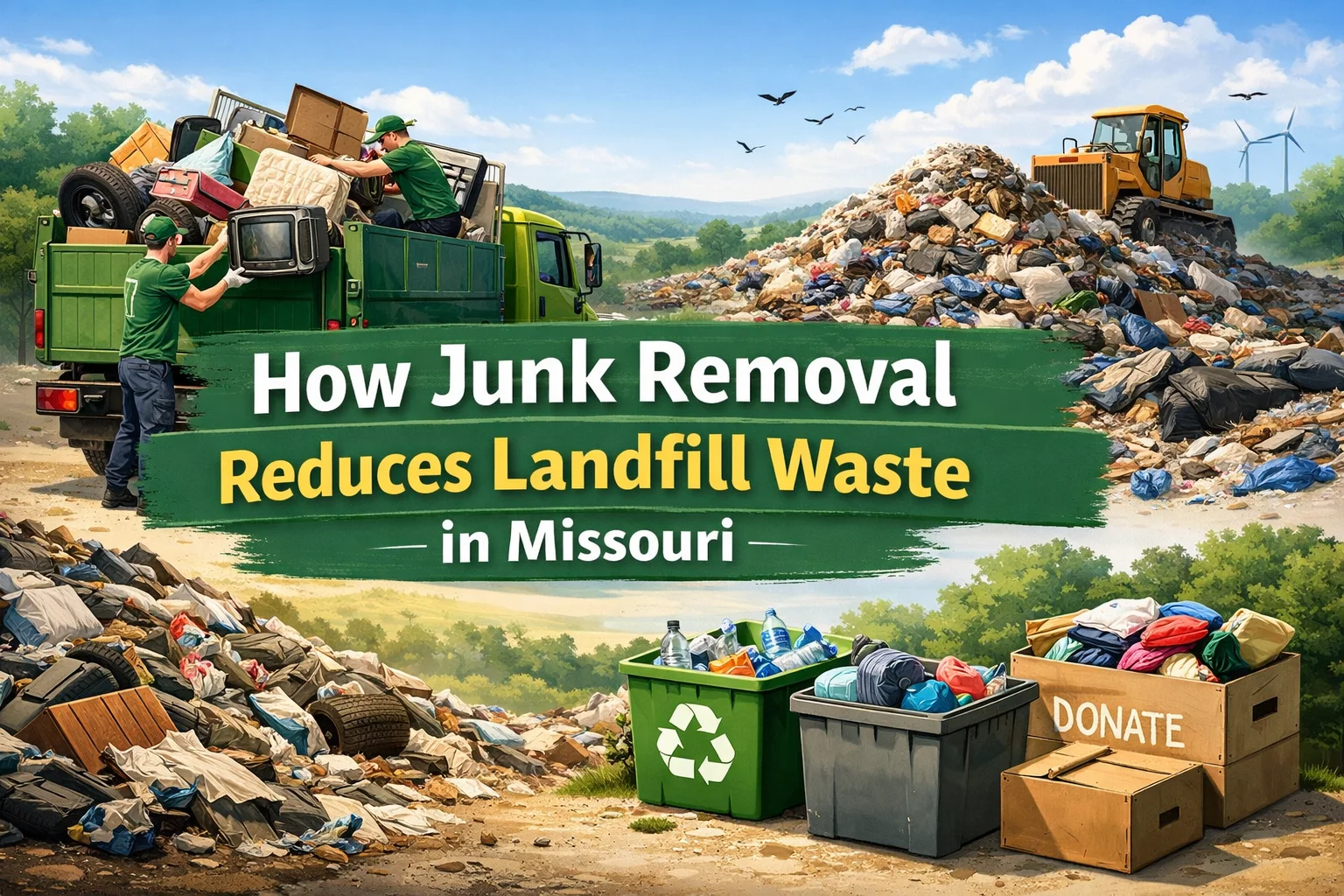
Professional junk removal services play an important role in diverting reusable and recyclable materials away from landfills. When you hire a junk removal company to clear out your property, you’re not just getting rid of stuff. You’re actually participating in a system that sorts, recycles, donates, and responsibly disposes of materials in ways most homeowners simply can’t do on their own.
This article breaks down exactly how junk removal reduces landfill waste in Missouri, what happens to your items after pickup, and why this matters for local communities like Springfield and surrounding areas.
Understanding Missouri’s Landfill Situation
Missouri currently operates dozens of active landfills. These facilities handle everything from household garbage to construction debris. The problem is that landfill space isn’t infinite. Every year, older landfills close and communities struggle to find suitable locations for new ones.
The average Missouri household produces roughly 4 to 5 pounds of waste per person daily. Multiply that across the state’s population, and you’re looking at a substantial amount of material heading to disposal facilities every single day.
What makes this concerning is the composition of that waste. Studies from the Environmental Protection Agency show that roughly 50% to 60% of what Americans throw away could be recycled, composted, or reused. Furniture, appliances, electronics, clothing, and construction materials often end up buried in landfills when they could have a second life elsewhere.
This is where professional junk removal changes the equation.
How Professional Junk Removal Services Work
When most people think about getting rid of junk, they picture loading everything into a truck and heading to the dump. That’s certainly one approach, but it’s not particularly efficient or environmentally responsible.
Professional junk removal operates differently. Here’s the typical process:
A crew arrives at your property and loads everything you want removed. But instead of driving straight to the landfill, reputable companies sort materials at a processing facility. Items get categorized based on their condition and material type.
Functional furniture, working appliances, and usable household goods go to donation centers or resale shops. Metals, plastics, cardboard, and glass head to recycling facilities. Electronics get sent to specialized e-waste processors. Construction materials like wood, concrete, and drywall may go to specialty recyclers.
Only items that truly have no other option end up in landfills.
This sorting process makes a real difference. A single estate cleanout might generate 10 tons of material. If a homeowner handled this alone, most of it would likely end up in the trash. A professional service might divert 50% to 70% of that weight away from the landfill through donations and recycling.
For families dealing with estate cleanouts in Springfield MO, this combination of convenience and environmental responsibility provides genuine value during an already difficult time.
The Donation Pipeline
One of the most impactful ways junk removal reduces landfill waste is through donations. Missouri has an established network of charitable organizations that accept used goods.
Organizations like Goodwill, Habitat for Humanity ReStores, the Salvation Army, and local churches actively seek donated items. Furniture, clothing, kitchenware, tools, building materials, and appliances all find new homes through these channels.
Professional junk removal companies maintain relationships with these organizations. They know what each charity accepts, their pickup schedules, and their condition requirements. This knowledge allows them to maximize donations rather than defaulting to disposal.
Consider what happens during a typical hoarder house cleanout. The volume of items can be overwhelming—thousands of individual pieces that need sorting. Without professional help, most of this would go straight to the landfill simply because the alternative requires too much time and coordination.
A junk removal crew can identify donatable items, separate recyclables, and ensure that only true garbage gets disposed of properly. In hoarding situations, it’s not uncommon for 30% to 40% of items to be salvageable through donations.
Recycling Beyond the Blue Bin
Most Missouri residents have access to curbside recycling for basic materials like cardboard, paper, aluminum cans, and certain plastics. But curbside programs have limitations. They typically don’t accept large items, mixed materials, or specialty items like electronics and appliances.
Junk removal services fill this gap.
Scrap metal represents one of the biggest recycling opportunities. Old appliances, bed frames, exercise equipment, lawn mowers, and countless other items contain steel, aluminum, copper, and other metals. These materials have real market value and are actively sought by recycling facilities.
When a junk removal company picks up your old refrigerator, they’re not just taking it off your hands. They’re sending it to a facility where the metal gets extracted and sold to manufacturers. The refrigerant gets properly captured to prevent environmental release. Plastic components may be recycled separately.
Electronics present similar opportunities. Missouri has several certified e-waste recyclers that extract valuable materials from computers, televisions, and other devices. These facilities recover precious metals like gold and silver while properly handling hazardous components like lead and mercury.
Construction and demolition debris also benefits from professional handling. During home renovations or debris removal projects, materials like concrete, wood, drywall, and roofing can often be recycled rather than landfilled. Clean concrete gets crushed and reused as aggregate. Unpainted wood may be chipped for mulch or biomass energy. Metal fixtures and hardware get separated for scrap recycling.
Mattress Recycling in Missouri
Mattresses deserve special mention because they present unique disposal challenges. A single mattress takes up about 40 cubic feet of landfill space. Missouri residents dispose of hundreds of thousands of mattresses annually.
Here’s the good news: mattresses are highly recyclable. The steel springs can be melted down. The foam gets shredded and used in carpet padding or pet bedding. Fabric can be recycled into industrial rags or insulation. Wood frames become mulch or fuel.
The problem is that mattress recycling requires specialized equipment and facilities. Most homeowners have no practical way to recycle their old mattresses. Curbside programs don’t accept them. Transfer stations often just bury them.
Professional junk removal companies increasingly partner with mattress recycling facilities. When you have an old mattress removed, it may travel to a processor that disassembles it and recovers the component materials. This keeps a bulky item out of the landfill while creating economic value from the recovered materials.
Appliance Disposal and Resource Recovery
Old appliances contain valuable materials, but they also present environmental risks if improperly disposed. Refrigerators and air conditioners contain refrigerants that damage the ozone layer if released. Older appliances may contain mercury, lead, or other hazardous materials.
Missouri regulations require proper handling of these materials. Licensed junk removal companies understand these requirements and ensure compliance. They work with certified appliance recyclers who capture refrigerants before dismantling units for scrap.
Beyond environmental compliance, proper appliance recycling recovers significant resources. A typical refrigerator contains about 120 pounds of steel, plus copper, aluminum, and plastics. All of this can be recycled rather than buried in a landfill.
Washing machines, dryers, dishwashers, stoves, and water heaters follow similar recycling paths. The metal content makes them economically attractive to recyclers, which means they rarely need to go to landfills when handled by professional services.
The Role of Junk Removal in Estate and Probate Cleanouts
When families deal with probate property cleanouts, the volume of items can be substantial. A lifetime of possessions needs to be sorted, removed, and properly handled—often under time pressure from estate deadlines or property sales.
Without professional help, the path of least resistance is often a series of dumpster loads heading straight to the landfill. But estate properties typically contain numerous items that have value or utility for others.
Furniture that seems outdated to one family might be exactly what a young couple furnishing their first apartment needs. Kitchenware, linens, books, and decorative items find ready homes through donation channels. Tools, lawn equipment, and garage items have strong resale or donation potential.
Professional estate cleanout services approach these projects systematically. They identify items with donation or resale value, separate recyclable materials, and dispose of only the genuine trash. This process takes more time and effort than simply filling dumpsters, but it dramatically reduces landfill impact.
Many families also appreciate knowing that their loved one’s possessions went to people who can use them rather than being buried in a landfill. There’s emotional value in that outcome beyond the environmental benefits.
Construction and Renovation Debris
Home improvement projects generate substantial waste. A kitchen renovation might produce hundreds of pounds of old cabinets, countertops, fixtures, and flooring. A roof replacement creates tons of shingles. Bathroom remodels yield old tubs, toilets, vanities, and tile.
Much of this material can be diverted from landfills with proper handling.
Concrete and masonry get crushed and reused as base material for roads and construction projects. Clean wood—meaning unpainted and untreated lumber—can be chipped for mulch, animal bedding, or biomass energy production. Metal fixtures, pipes, and hardware have scrap value.
Even materials that seem like pure garbage sometimes have better options. Old carpet can be recycled into new carpet padding or plastic lumber. Asphalt shingles may be processed and used in road construction. Drywall can be recycled back into new drywall products.
The key is sorting materials at the source and routing them to appropriate facilities. This requires knowledge, relationships with recyclers, and a commitment to the extra effort involved. Professional debris removal services handle this routinely.
For Springfield area homeowners working on renovations, partnering with eco-friendly junk removal services ensures that construction waste gets maximum diversion from landfills.
Yard Waste and Organic Materials
Yard waste represents a significant portion of what ends up in Missouri landfills. Grass clippings, leaves, branches, and brush are all organic materials that decompose naturally—but they create problems in landfills.
When organic materials decompose in the oxygen-deprived environment of a landfill, they produce methane. This greenhouse gas is roughly 25 times more potent than carbon dioxide in terms of climate impact. Landfills are actually one of the largest human-made sources of methane emissions.
Composting offers a better alternative. When yard waste decomposes in a composting environment, it produces useful soil amendments rather than harmful gases. Many Missouri communities operate composting facilities that accept yard waste.
Professional junk removal services often handle yard waste as part of property cleanouts. Rather than mixing organic materials with other debris, they separate it for composting. Large branches might go to wood chippers. Smaller organic matter heads to composting facilities.
This sorting takes extra effort but yields meaningful environmental benefits while reducing landfill volume.
Electronics and E-Waste
Americans generate millions of tons of electronic waste annually. Computers, televisions, phones, tablets, printers, and countless other devices eventually reach the end of life. Unfortunately, many of these items end up in regular trash.
Electronics contain valuable materials like gold, silver, copper, and rare earth elements. They also contain hazardous materials like lead, mercury, cadmium, and flame retardants. When electronics end up in landfills, these hazardous materials can leach into groundwater, while valuable materials get permanently lost.
Missouri has several certified e-waste recyclers that properly handle electronic devices. They extract valuable materials for reuse while safely managing hazardous components. But most residents don’t know about these facilities or find them inconvenient to use.
Junk removal services routinely collect electronics and route them to appropriate recyclers. That old tube television or outdated computer tower gets properly processed rather than buried in a landfill. This protects the environment while recovering materials that have genuine economic value.
Hazardous Waste Handling
Some materials require special handling because they pose environmental or health risks. Paint, motor oil, pesticides, cleaning chemicals, batteries, and fluorescent bulbs all fall into this category.
Missouri residents can dispose of household hazardous waste through periodic collection events or permanent drop-off facilities. But many people don’t participate in these programs. They throw hazardous items in regular trash, put them out for junk removal, or leave them behind in properties.
Responsible junk removal companies identify hazardous materials and ensure proper disposal. They know which items require special handling and have processes for routing them appropriately. This prevents hazardous materials from contaminating landfills or the environment.
During property cleanouts, it’s common to find old paint cans, automotive fluids, pool chemicals, and other hazardous items that accumulated over years. Professional services handle these materials properly rather than simply mixing them with regular debris.
Economic Benefits of Landfill Diversion
Reducing landfill waste isn’t just environmentally responsible—it makes economic sense too.
Missouri communities pay for landfill capacity. When that capacity fills up, they face expensive choices: expand existing facilities, build new ones, or ship waste elsewhere. All of these options cost taxpayer money.
Extending landfill life through waste diversion delays these costs. Every ton of material recycled or donated is a ton that doesn’t consume landfill space. This preserves a finite resource and pushes major capital expenditures into the future.
Recycling also creates jobs and economic activity. Missouri’s recycling industry employs thousands of workers at processing facilities, scrap yards, and manufacturing plants that use recycled materials. These are local jobs that keep money circulating in Missouri communities.
The donation economy similarly generates economic activity. Thrift stores and resale shops employ workers, generate sales tax revenue, and provide affordable goods to budget-conscious consumers. When junk removal diverts items to these channels, everyone benefits.
What Happens to Different Materials
Understanding where materials go helps illustrate the impact of professional junk removal. Here’s a breakdown of common items and their typical destinations:
Furniture in good condition goes to donation centers like Habitat ReStore, Goodwill, or local charities. Damaged furniture may be disassembled for wood recycling if possible, with only non-recyclable components going to landfill.
Metal items—including appliances, bed frames, exercise equipment, and lawn mowers—go to scrap metal processors. The metal gets melted down and manufactured into new products.
Electronics travel to certified e-waste processors who recover precious metals and properly manage hazardous components.
Mattresses increasingly go to specialized recyclers who separate steel springs, foam, fabric, and wood for individual recycling streams.
Clothing and textiles in wearable condition go to donation centers. Worn items may go to textile recyclers who produce industrial rags, insulation, or fiber for new products.
Construction materials follow various paths: concrete to aggregate processors, clean wood to mulching or biomass facilities, metal to scrap recyclers, and drywall to gypsum recyclers when available.
Yard waste goes to composting facilities or mulching operations.
Hazardous materials travel to licensed disposal facilities that can handle them safely.
Only items with no viable alternative end up in landfills. This selective approach dramatically reduces the volume that gets buried.
Choosing an Environmentally Responsible Junk Removal Service
Not all junk removal companies prioritize landfill diversion. Some take the easy route and dump everything at the nearest landfill. Others make genuine efforts to recycle and donate.
When selecting a junk removal service, ask about their disposal practices. Reputable companies can explain their sorting processes, donation partnerships, and recycling relationships. They should be able to tell you approximately what percentage of collected materials gets diverted from landfills.
Look for companies that emphasize environmental responsibility in their operations. Those that mention recycling, donations, and sustainable practices on their websites or marketing materials typically walk the walk.
Local companies often have stronger community ties and may partner with local charities and recyclers. They may be more invested in reducing landfill impact in their own community compared to national chains focused primarily on efficiency and volume.
Price shouldn’t be the only factor. Companies that invest in sorting and diversion may charge slightly more than those who simply dump everything. The environmental benefit justifies the modest premium.
The Future of Waste Management in Missouri
Missouri’s approach to waste management continues to evolve. Recycling programs expand. New processing facilities open. Communities explore innovative approaches like single-stream recycling, extended producer responsibility, and waste-to-energy technologies.
Professional junk removal services play an increasing role in this ecosystem. They fill gaps that residential recycling programs can’t address. They handle specialty items and large volumes that homeowners struggle to manage. They maintain relationships with recyclers, donation centers, and processors that individual residents simply can’t replicate.
As landfill space becomes scarcer and disposal costs rise, the economic case for diversion strengthens. Junk removal companies that prioritize recycling and donation position themselves for long-term success in an industry moving toward sustainability.
For Missouri residents, this trend means more options for responsible disposal. You don’t have to choose between convenience and environmental responsibility. Professional services offer both.
Making a Difference with Every Cleanout
Whether you’re clearing out a single room or handling a full estate cleanout, your choices about disposal matter. The materials from your project will either consume landfill space for decades or circulate back into the economy through recycling and reuse.
Professional junk removal makes the environmentally responsible choice the easy choice. You get the convenience of having everything removed in one appointment. The sorting, routing, and disposal happen behind the scenes. Materials end up in their best possible destination without requiring your time and effort.
This combination of convenience and responsibility explains why more Missouri families choose professional junk removal for major cleanouts. It’s simply a better way to handle large volumes of unwanted items.
Need Junk Removal in Springfield, Missouri?
If you’re facing a property cleanout, renovation project, or just have accumulated junk that needs to go, Easy Cleanouts LLC offers professional junk removal services throughout the Springfield, Missouri area.
Easy Cleanouts LLC handles everything from single-item pickups to complete estate cleanouts. The team sorts materials for donation and recycling, ensuring maximum diversion from local landfills. Whether you’re dealing with furniture, appliances, electronics, yard waste, or construction debris, they have the equipment and expertise to handle it efficiently.
Services include general junk removal, estate cleanouts, probate property cleanouts, senior downsizing assistance, hoarder house cleanouts, disaster cleanup, and homeless camp cleanup. The company serves Springfield and surrounding communities with fast, affordable service.
When you work with Easy Cleanouts LLC, you’re not just getting rid of stuff. You’re partnering with a local company committed to responsible disposal practices that benefit our community and environment.
Contact Easy Cleanouts LLC today for a free estimate on your junk removal project. Fast service, fair pricing, and environmentally responsible disposal—that’s the Easy Cleanouts difference.