
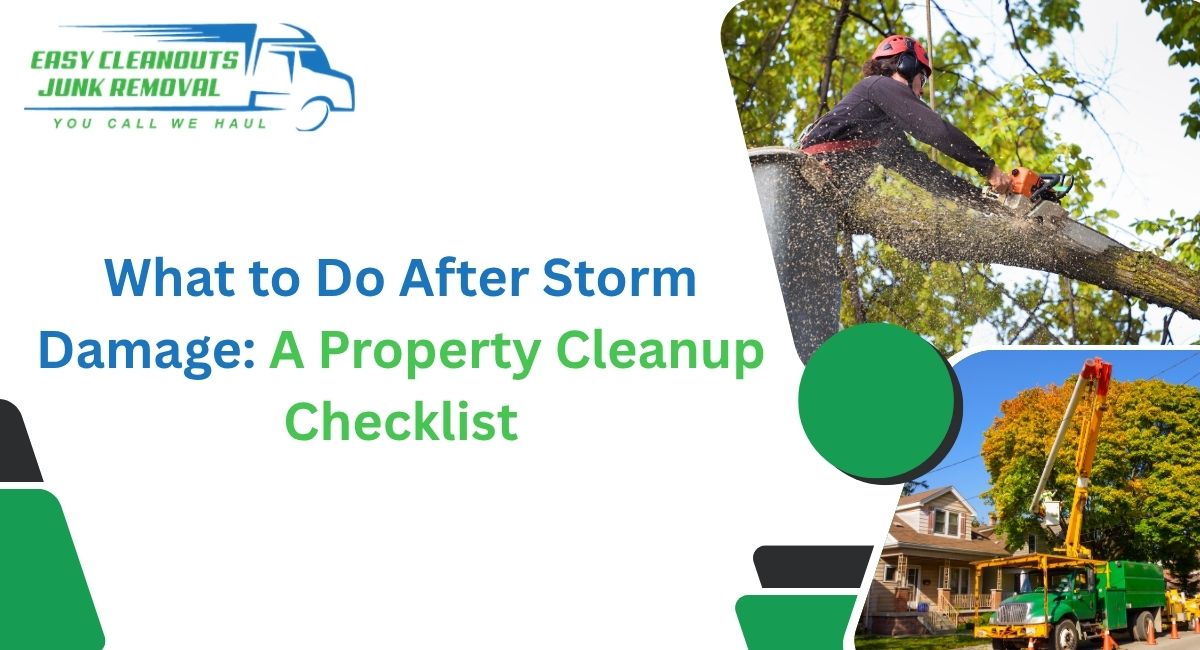
The storm passes and you step outside to shingles in the yard, a tree on the fence, and water where it should not be. The instinct is to start picking things up immediately. Resist it for about an hour.
What you do in the first 24 hours determines how much your insurance pays, how much secondary damage you end up with, and whether the cleanup takes one week or three. Here is the order to do it in.
1. Check Safety Before You Touch Anything
Do not enter a damaged structure until you are certain it is stable. Sagging ceilings, buckled walls, and shifted foundations are all signs to stay out and wait for an inspection.
Treat every downed power line as live, and stay at least ten feet away from it and from anything it touches, including puddles and fences. Never assume a line is dead because it is not sparking.
Other checks before you begin:
- Smell for gas. If you detect any, leave immediately and call the utility from outside.
- Shut off electricity at the main breaker if any circuits or appliances have been in water, but never stand in water to do it.
- Wear sturdy boots, long sleeves, and heavy gloves. Storm debris is full of nails, glass, and splintered wood.
- Keep children and pets away from the work area entirely.
2. Document Everything Before You Move It
This is the step people skip and regret. Once debris is cleared, proving what was there becomes almost impossible.
Photograph and video everything from multiple angles: the exterior, the roof from ground level, every damaged room, water lines on walls, and damaged belongings individually. Get wide shots that establish the whole property and close shots that show detail. Include something for scale where it helps.
Then write a list of damaged items with approximate purchase dates and values. Do it now while you remember, not in three weeks when the adjuster asks.
3. Call Your Insurance Company
Call the same day if possible. Most policies have reporting deadlines, and claims filed quickly get adjusters assigned faster, which matters when an entire neighborhood is filing at once.
Ask three questions on that first call: what your deductible is, whether your policy covers temporary repairs and debris removal, and whether you need approval before hiring anyone. Get a claim number and write down who you spoke with.
Keep every receipt from this point forward, including tarps, plywood, hotel stays, and hauling costs.
4. Stop the Damage From Spreading
Most policies require you to take reasonable steps to prevent further loss, and damage that happens after the storm because you did nothing may not be covered.
Tarp the roof, board broken windows, and move undamaged belongings to a dry area. These are temporary measures, not repairs. Do not start permanent work until the adjuster has seen the property.
5. Dry It Out Within 48 Hours
This is the most time sensitive item on the list. Mold begins colonizing damp materials quickly, and the CDC recommends drying wet materials within 48 hours of getting wet, or removing the materials altogether.
Get air moving with fans and a dehumidifier, open windows if the weather allows, and pull up soaked carpet and padding. Wet drywall, insulation, and particleboard furniture usually cannot be saved and should come out rather than be dried in place. The EPA’s flooded homes guidance covers what can be salvaged and what should go.
If flood water entered the building from outside, treat it as contaminated regardless of how clean it looks.
6. Sort Into Three Piles
Work room by room rather than jumping around. Salvage, discard, and undecided. Anything porous that absorbed contaminated water goes in the discard pile, including mattresses, upholstered furniture, and carpet.
Do not photograph and then immediately bag everything. Keep discarded items in a pile outside until the adjuster has inspected them, unless they pose a health hazard.
7. Clear the Debris
This is where most cleanups stall. A single damaged room can produce more than a pickup truck can handle, and a full property easily runs to several truckloads of wet drywall, ruined furniture, roofing material, and yard debris. Wet material is also two to three times heavier than people expect.
Professional disaster cleanup services handle the hauling, sorting, and proper disposal in one pass, which matters because storm debris usually includes items that cannot go in a standard load. Damaged appliances, electronics, and chemicals all need separate routing. Yard waste, fallen limbs, and general wreckage are handled through junk and debris removal, and if the property needs clearing beyond the storm damage itself, a full home cleanout can run at the same time.
Get the Property Cleared
Our Springfield crew handles storm cleanups across Greene County and the surrounding area. We work around your insurance timeline, and we can be on site quickly after severe weather.
Request a free quote and we will come assess the property and give you a straight answer on scope and timing.
How soon should I start cleaning up after a storm?
Safety checks and documentation come first, usually within the first few hours. Water extraction and drying should begin within 48 hours to limit mold growth. Debris removal can wait until your adjuster has inspected, unless materials are creating a hazard.
Will my insurance cover debris removal?
Most homeowners policies include some debris removal coverage, though limits vary and it is often capped as a percentage of the total claim. Ask specifically about it on your first call and get the answer in writing.
Can I throw away damaged items before the adjuster comes?
Generally no. Photograph everything, then keep discarded items accessible until the inspection. If something poses a genuine health risk, document it thoroughly first and note why it had to be removed immediately.
What storm debris cannot go in a regular dumpster?
Appliances containing refrigerant, electronics, paint, fuel, propane tanks, tires, and any hazardous chemicals all require separate handling. Mixing them into a general load usually means the whole load gets rejected at the facility.
Do I need a separate company for water damage and debris removal?
Sometimes. Structural drying and mold remediation are specialized services. Clearing out ruined materials, furniture, and debris is a removal job. Many properties need both, and coordinating them in the right order saves time.